Challenge
Inventory, sales, and delivery data moved between separate spreadsheets and people. That made it hard to track who promised what, whether stock was available, and where fulfilment stood.
Solution
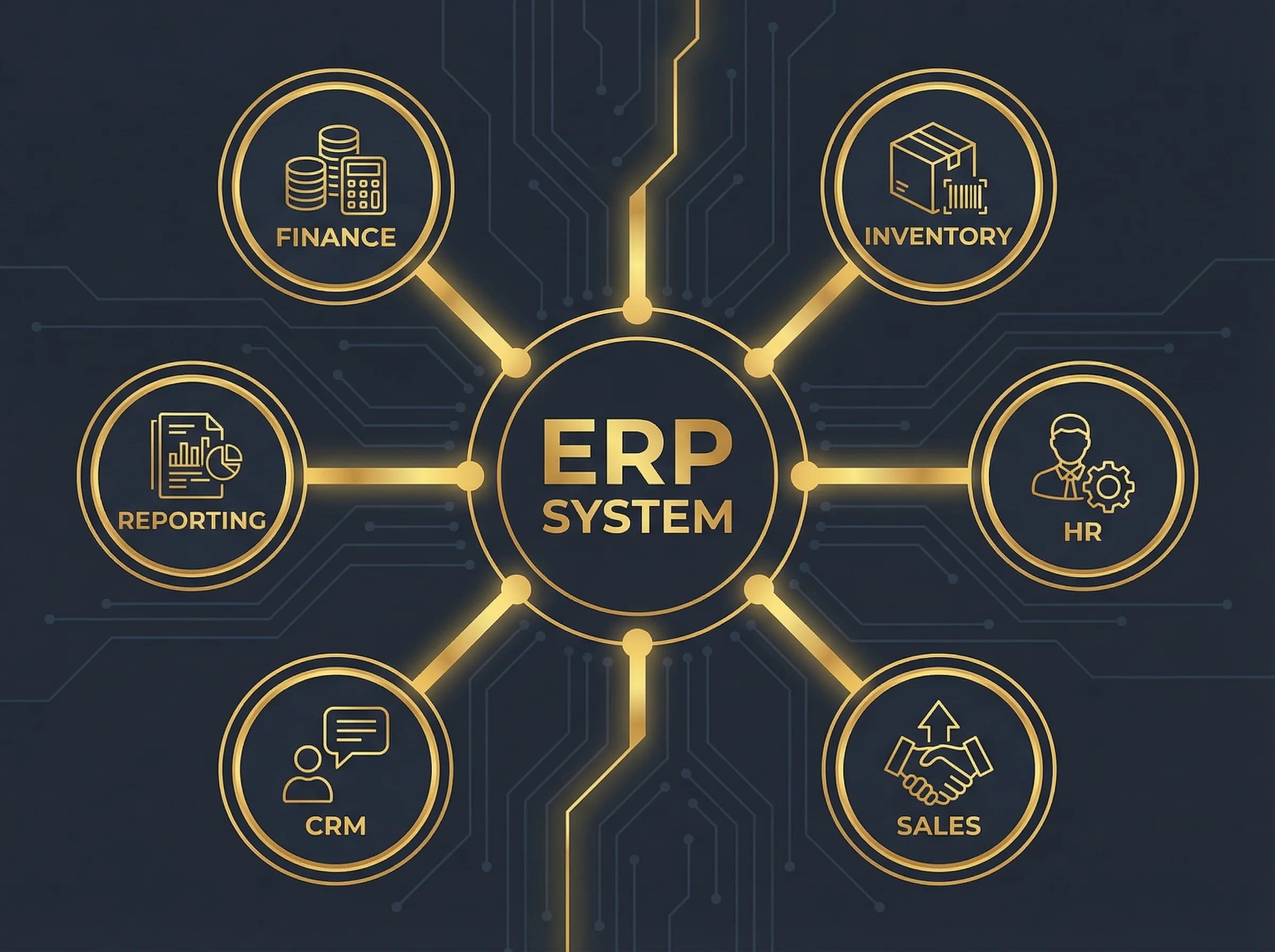
We built the ERP flow around the real roles: sales, warehouse, administration, and management. Each module records the next step, while reports are generated from the system instead of manual copying.
About the Project
The client had several separate processes: inventory was tracked in spreadsheets, sales prepared quotes separately, and administration copied data into invoicing and delivery workflows. The core problem was not only software, but the lack of one sequence from request to fulfilment.
The first step was process mapping: how an inquiry enters, when it becomes a quote, who approves discounts, how stock is reserved, when delivery is created, and what management needs to see. We then built the ERP modules in stages so the team could validate the real workflow before more advanced reporting was added.
The solution included stock cards, sales quotes, orders, delivery statuses, invoicing, roles and permissions, audit trail for key changes, and a management dashboard. Integrations were planned so the system can connect to e-commerce, accounting, or external APIs without rewriting the core process.
This case study is published without the client name and without invented percentages. It shows Saitami's real type of work: process first, working MVP second, then iterations on modules, reports, and automations.
Technologies
Features
- Складови наличности и резервиране по поръчка
- Оферти, продажби и статуси на доставки
- Фактуриране и подготовка за счетоводна интеграция
- Роли, права и audit trail за важни действия
- Управленски справки без ръчно събиране на таблици
- Архитектура, готова за онлайн магазин и външни API интеграции
Need a similar working process?
This case study connects to services that Saitami builds as real business systems, not isolated pages.
Gallery