How to Choose a Website for an Aesthetic Center
The website of an aesthetic center or cosmetic clinic should do three things without requiring a phone call: show what you offer, answer whether you are the right specialist, and provide an easy way to book an appointment. It is not enough for the page to look luxurious. It must present procedures clearly, work well on mobile, and build trust before the first visit. When searching for “Advance Aesthetic”, a potential client expects to find the exact brand, services, address and a way to get in touch—not a generic homepage.
What should an aesthetic center website achieve?
Visitors to this type of website rarely start with a decision already made. They compare procedures, prices, specialists, results and the impression created by the brand itself. That is why the website must guide people from general interest to a specific action: an enquiry, a phone call or a booked appointment.
For an aesthetic center, this means a structure aligned with the way reception actually works. The homepage presents the main areas of service, but every important procedure gets its own page. This allows clients to read how the service works, who it is suitable for, what preparation is needed and how to ask a question.
Good website development starts with these processes, not with choosing a ready-made template. Before the design, the procedures, locations, specialists, booking methods and the information the team repeats on the phone every day should all be clear.
How should you present procedures and services?
Give each main procedure its own page
A “Procedures” page with a long list is not enough. For laser hair removal, injectable procedures, facial treatments or device-based services, it is more useful to have separate pages with clear URLs and headings. This helps both visitors and Google understand exactly what the content is about.
On each page, present the information in the same order: what problem the procedure solves, who it is suitable for, how it works, whether there is a recovery period, what the limitations are and how to book a consultation. If the price depends on the area, number of visits or an individual assessment, say so directly. Do not make the client guess.
Show real results with the necessary context
Before-and-after photos can be powerful evidence, but only when presented properly. State what was done, under what conditions the photos were taken and whether the result is individual. Avoid images that look like stock photos or promise an impossible result.
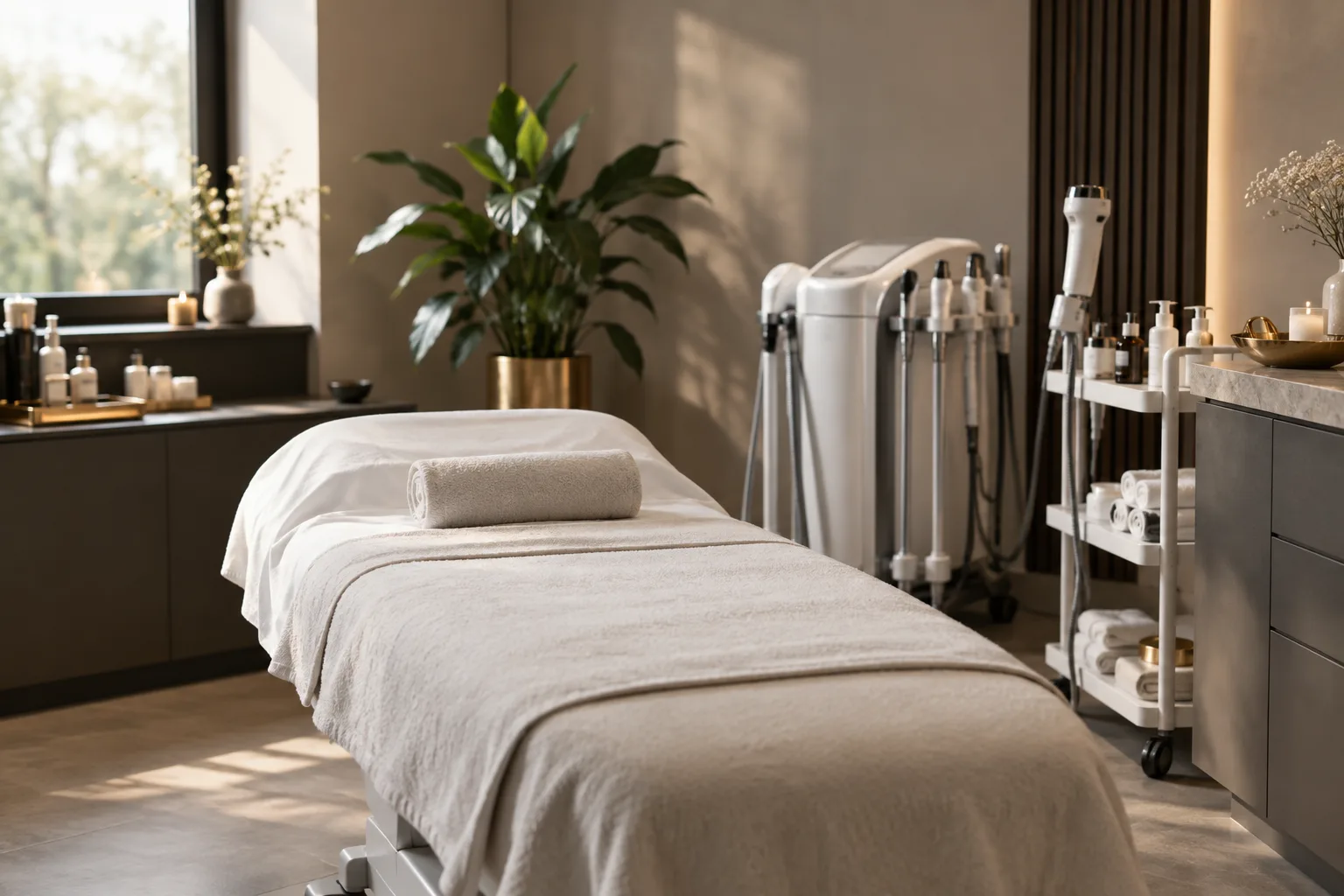
Photos of the treatment rooms, equipment and team also matter. A clean, calm space reduces anxiety before the first visit. A photo of a device without any explanation is less useful than a short text describing what it is used for and who operates it.
Present specialists as people, not job titles
A specialist’s profile should answer the questions clients have before a procedure: what qualifications they have, which services they specialise in and how they approach consultations. A portrait, name, role and verifiable professional information build more trust than a generic promise of “high quality”.
How can you make booking easier?
The booking button should be visible on the homepage, procedure pages and every specialist’s page. On mobile, it should be large enough to tap with a thumb. The phone number, address and opening hours should not be hidden only at the bottom of the website.
There are several approaches that work. An enquiry form is suitable when a consultation is needed first. An online calendar is convenient when a service has a fixed duration and the team can manage available time slots. Phone calls and chat are useful for more complex questions, but they should not be the only way to book.
| Approach | When it is suitable | What to include |
|---|---|---|
| Enquiry form | When a consultation or procedure selection is needed | Name, phone number, preferred day, service and consent to be contacted |
| Online calendar | When specialists and services have clearly defined time slots | Opening hours, duration, buffer between appointments and automatic confirmation |
| Phone call | When clients prefer to speak with someone | A visible number, call tracking and someone to answer |
| Combined approach | When there are multiple specialists and different types of services | A consistent process for enquiries, confirmations and changing appointments |
It is important that every enquiry reaches the right person. If the form sends an email that gets lost among other messages, the website only creates a new problem. With a larger team, enquiries can be organised in a CRM or booking system, so it is clear who will contact the client and what the status of the conversation is.
How does the website build trust in the brand?
Luxury design does not necessarily mean a black background, gold lettering and large images. Trust comes from consistency: the same tone of voice throughout the copy, clear services, real photos, easy-to-understand terms and straightforward contact options. The visual identity should support the brand positioning, not make the site harder to read.
Show the address and entrance to the premises, information about parking or access by public transport, opening hours and what the client should bring to the first consultation. If you operate in more than one location, each location should have its own information and map.
Add frequently asked questions for specific procedures. Answers to questions such as “Does it hurt?”, “How long does it take?”, “What should I avoid before my appointment?” and “When can I return to my usual activities?” are more useful than a generic advertising message.
Claims must be chosen carefully in medical and aesthetic services. The website should not guarantee the same result for everyone or replace an individual consultation. When a procedure has contraindications, direct the client to a specialist instead of hiding the information.
How can the website appear in searches such as Advance Aesthetic?
When someone searches for “Advance Aesthetic”, their intent may be navigational: they already know the name and want to find the official website. That is why the homepage should clearly include the brand name, city, main services and a reliable way to get in touch. The title and description in Google should be distinct from those of competitors.
Searches such as “aesthetic centre Sofia”, “laser hair removal Sofia” or the name of a specific procedure require separate, useful pages. It is not enough for one page to repeat every keyword. You need a solid technical foundation, fast loading, a mobile version, clear URLs and content that answers real questions.
SEO optimisation is separate work from the website build itself. It should be planned together with the structure, because changing URLs after publication can lead to the loss of visibility already built up. Set up tracking for forms, calls and bookings as well, so you know which pages generate genuine enquiries.
What should the technical brief include?
- 01Describe the services and target clients
Make a list of the procedures, specialists, locations and visitor types. Note which services are priorities and which questions are asked most often over the phone.
- 02Choose a booking process
Decide whether you will use a form, online calendar, phone or a combination. Clarify who confirms the appointment, how a booking is changed and where the information is stored.
- 03Prepare the content and materials
Collect the logo, colours, photos, biographies, certificates, addresses and procedure guidelines. If some of the copy is missing, note who will approve it and when it will be provided.
- 04Check the mobile version and forms
Test the homepage, procedure pages, map, phone number and form on different phones. Check whether you receive a notification and whether the visitor sees a confirmation.
- 05Set up tracking and maintenance
Connect analytics, call tracking and goals for submitted forms. Clarify who will handle updates, backups and minor changes after launch.
How do you choose an agency for your website?
Look for an agency that can show work built around similar logic, not just attractive homepages. A good example is Vida Luxe — aesthetic clinic website, which combines procedures, a premium visual direction and online appointment booking. It is important to look beyond the design and see how the navigation, content and customer journey have been handled.
At the first meeting, ask them to show you what a procedure page, specialist profile and the process after submitting a form will look like. Ask who writes the copy, who uploads the photos, how enquiries are managed and what remains the property of your company.
A standard website is priced at €500–€5,000. This may include different numbers of pages, custom design, an admin panel, forms and integrations. The price varies according to the number of procedures, the complexity of online booking, multilingual support, content preparation and connections to external systems.
Do not compare only the final price. Compare what you will receive: strategy and structure, design, a mobile version, an SEO foundation, form setup, training, hosting and support. If the offer is unclear, a low starting price can turn into additional costs with every subsequent change.
When does a website need to connect to other systems?
For a single treatment room and a small team, a form and calendar may be enough. With more specialists, multiple locations and ongoing advertising campaigns, it is useful to collect enquiries in one place. This allows reception to see new enquiries, confirmed appointments, cancellations and the communication history.
An integration can connect the website to a calendar, CRM, email, SMS or booking platform. API integrations make sense when they reduce manual data entry and prevent double bookings. If the process is small, do not add a complex system just because it is fashionable.
Frequently asked questions
How much does a website for an aesthetic centre cost?
For a standard website, the typical price range is €500–€5,000. The price depends on the number of pages, the booking method, the content, the languages and the integrations required.
Does every cosmetic procedure need its own page?
Usually, yes, for the main procedures. A dedicated page makes things easier for the client, allows for more precise SEO content, and provides space for preparation instructions, contraindications, the specialist and booking.
Can the website accept online appointment bookings?
Yes, through a form, calendar or integration with a booking system. The choice depends on the number of specialists, the duration of the services, and how the team confirms and changes appointments.
What should the website include when people search for Advance Aesthetic?
The homepage should clearly display the brand’s official name, services, location and contact details. It is also important for the Google title, mobile version and booking page to match what someone searching for that specific brand expects.
Frequently asked questions
- How much does a website for an aesthetic centre cost?
- For a standard website, the typical range is €500–€5,000. The price depends on the number of pages, booking method, content, languages and required integrations.
- Does every cosmetic procedure need its own page?
- Usually, yes, for the main procedures. A dedicated page makes things easier for the client, allows for more precise SEO content, and provides space for preparation instructions, contraindications, the specialist and booking.
- Can the website accept online appointment bookings?
- Yes, through a form, calendar or integration with a booking system. The choice depends on the number of specialists, the duration of the services, and how the team confirms and changes appointments.
- What should the website include when people search for Advance Aesthetic?
- The homepage should clearly display the brand’s official name, services, location and contact details. It is also important for the Google title, mobile version and booking page to match what someone searching for that specific brand expects.