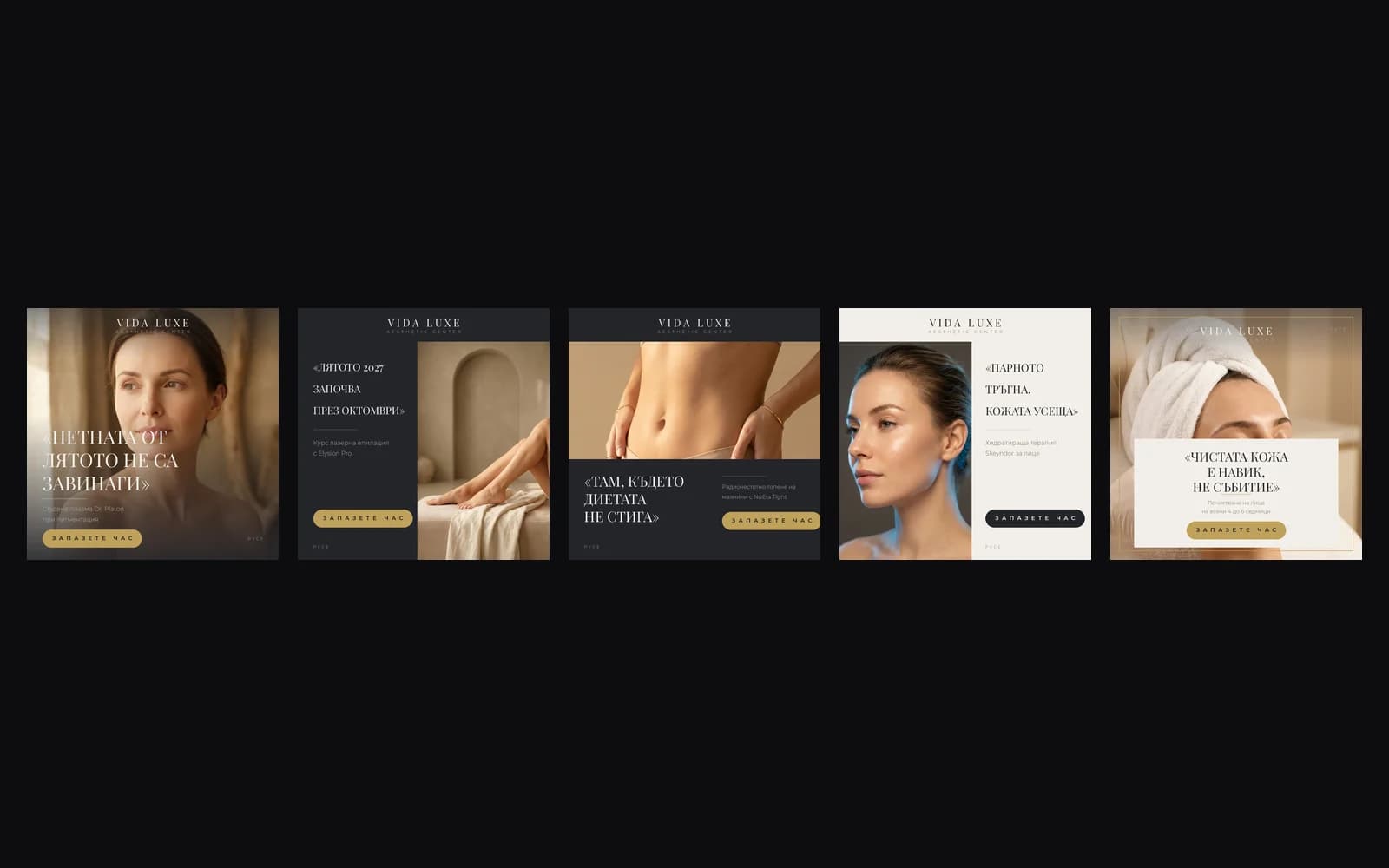
Vida Luxe is an aesthetic centre in Ruse whose website we built in 2025. In the summer of 2026, the owner wanted the centre to maintain a regular presence on Facebook and Instagram without hiring someone for it or having to think up new posts every week.
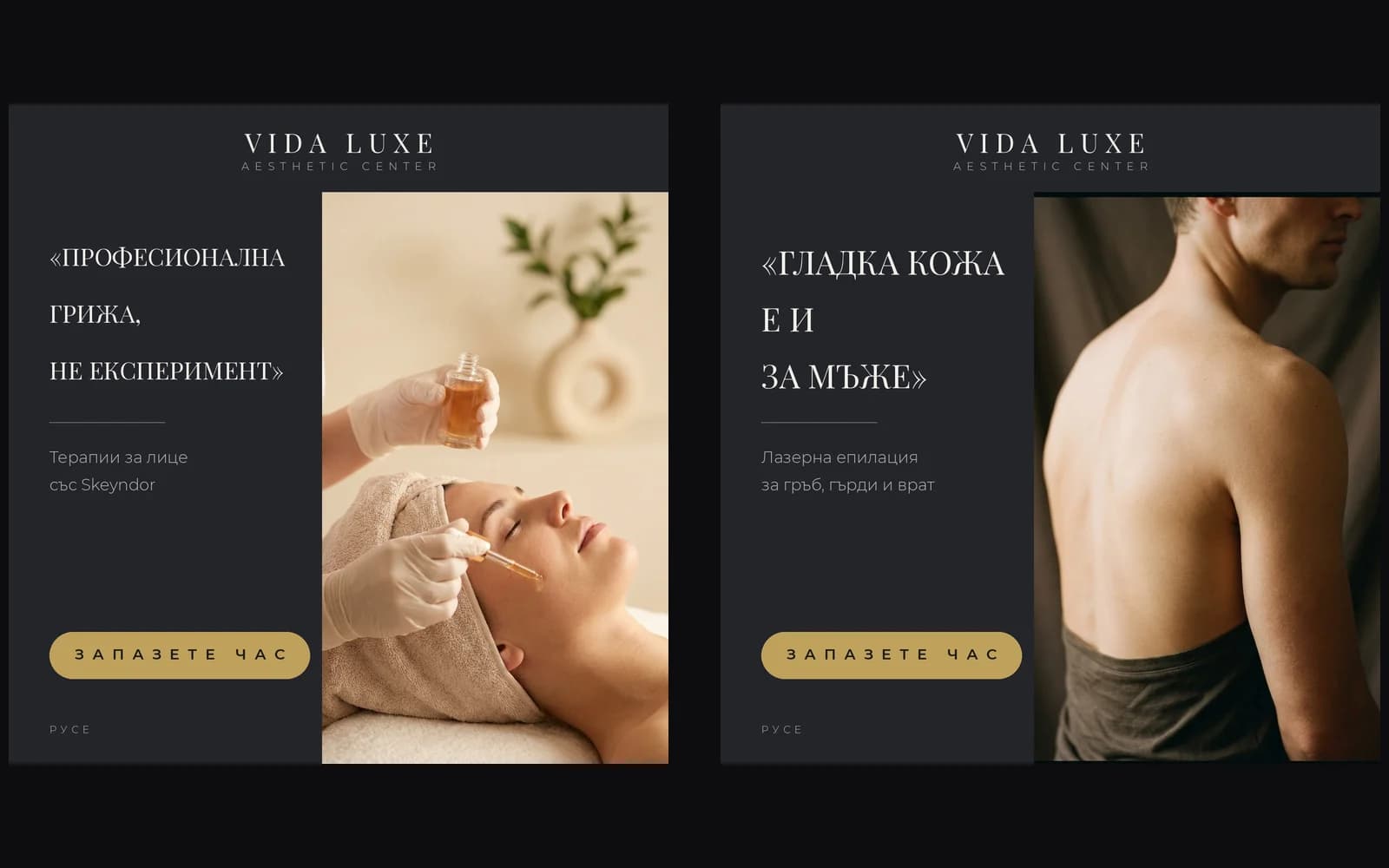
We built it as a system, not as a “we’ll put something out”. Every month, we create a calendar: three posts a week, on Monday, Wednesday and Friday at 11:20, each tied to a specific device or treatment the centre actually offers: laser hair removal with Elysion Pro, NuEra Tight radiofrequency, Dr. Platon cold plasma, Expert Cleanse PRO cleansing, and Skeyndor and Gigi treatments and cosmetics. The copy uses the formal “you”, and is short and honest: it says who the treatment is for, what it does and what it does not promise.
The images are generated by an AI model from a brief written for each post: lighting, shot, person and mood. The model never writes text, however. Every letter on the image is drawn by our own template because generated Cyrillic breaks. The template is locked: the same wordmark, the same headline font, the same gold “Book an appointment” button and “Ruse” on every post. From October, there are five layouts, so no two adjacent posts in the profile look alike while the brand remains consistent.
The client approves the entire month from one page: the date, image, copy and hashtags for every post. Nothing goes live without an explicit “yes”. Once approved, Facebook posts are scheduled natively, while Instagram, which has no scheduling in its API, is handled by our publishing module on our server: every ten minutes, it checks what is due and uploads it. Two monitors protect the process: one raises an alarm if the module stops, and the other when fewer than four approved posts remain — roughly a week before the profile falls silent.
September 2026: 13 of 13 posts went out on their scheduled day and time, simultaneously on both channels. Before that, we had also tested Google Ads for the centre: the ads reached the top positions but generated no calls, so we recommended stopping after the test instead of spending the client’s budget.