ERP software for businesses in Lom
You get an ERP system tailored to the way your business in Lom operates, from sales and stock levels to deliveries, invoices and reports. We organise your processes in one web-based system with team roles, integrations and phased implementation, without interrupting your day-to-day work.
What does an ERP system manage?
When customer, order, inventory and invoice data is kept in separate spreadsheets and programs, one change often has to be entered several times. An ERP system brings these actions together in one process and shows each person only the information they need.
- Sales and customers, enquiries, quotes, orders, contracts and relationship history.
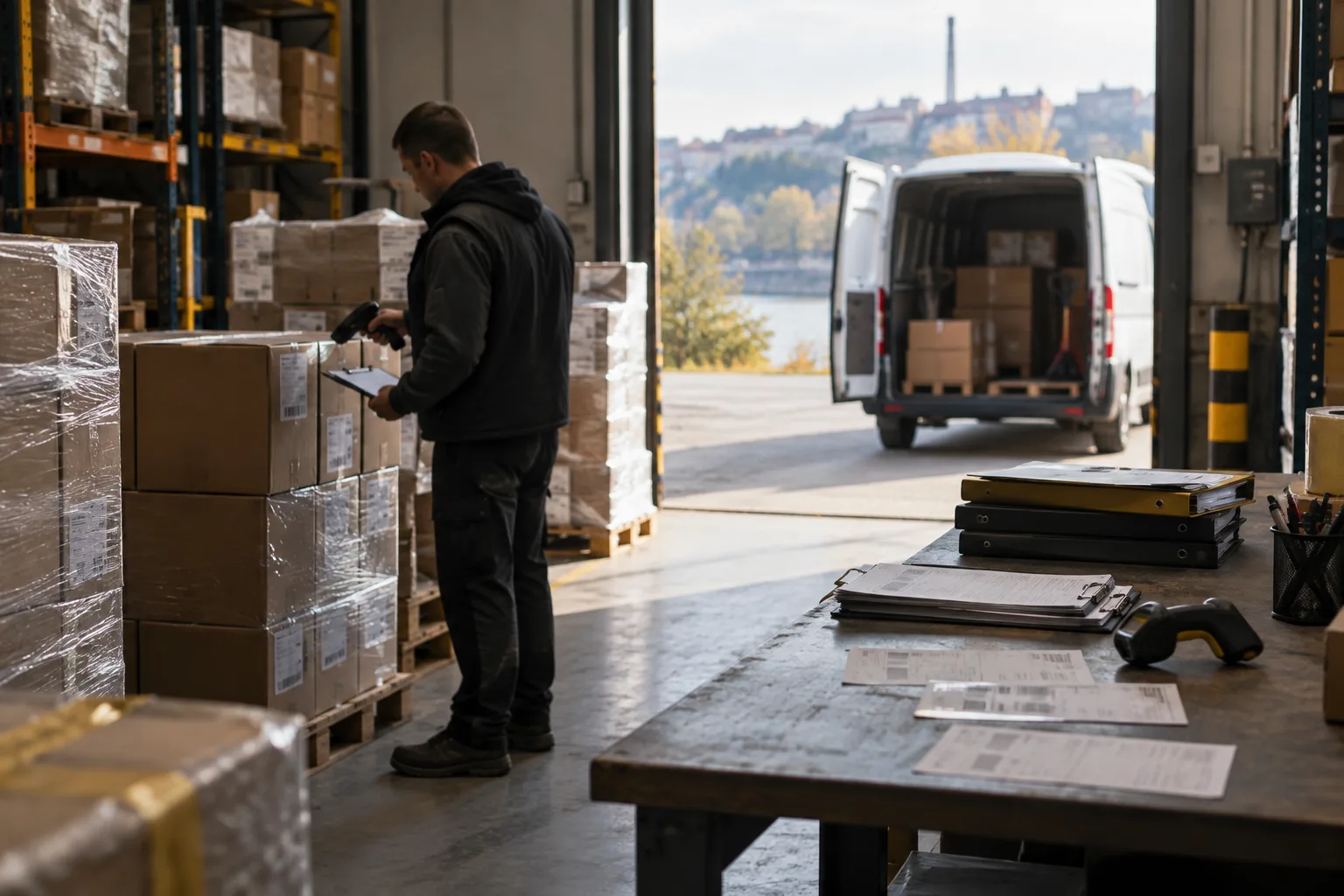
- Inventory, products, stock levels, movements, deliveries, reserved quantities, batches and serial numbers when needed.
- Deliveries and purchasing, suppliers, requisitions, goods receipt and expense tracking.
- Invoices and payments, issuing documents, statuses, reports and connections to accounting or payment software.
- Reports, turnover, margin, overdue payments, inventory movements, completed orders and team performance.
- Roles and permissions, separate access for owners, managers, sales staff, warehouse employees, accountants and external partners.
You can start with the core functionality you need now and add production operations, service, deliveries, document management or a customer portal when your processes require them. Explore Saitami ERP system as an example of connecting CRM, telephony, tickets and automation in one environment.
Is ERP right for your business in Lom?
Custom ERP makes sense when a business has more than one team, warehouse or sales channel and starts losing time transferring data manually. It is also a good fit when managers have to wait for reports, cannot spot deviations in time or different employees work with different versions of the information.
The system should not copy every old spreadsheet. First, we identify the process that creates risk or delays, then build the screens and rules around it. This keeps the ERP a practical tool rather than another program the team works around.
What integrations can be added?
The ERP system can exchange data with your existing software via API. Depending on your processes, we connect online stores or websites, payment services, couriers, telephony, email, accounting software, bank statements and notification systems.
The goal is for orders not to be copied from the website into the ERP, for the warehouse to receive accurate instructions and for customers to get timely information. When needed, we can import initial data from Excel, CSV or an old system. For connecting separate platforms, see API integrations and software connectivity.
How is implementation carried out without interrupting work?
- 01Process clarification
We talk to the people who handle enquiries, sell, purchase, manage the warehouse and issue documents. We describe the inputs, approvals, exceptions and reports the manager needs.
- 02System plan
We organise the modules, roles, integrations and data to be transferred. We define what goes into the first version and what remains for a later stage, so the scope is clear.
- 03Development and configuration
We build the screens, rules and automated notifications. We set up a test environment where the team can check real-life scenarios without changing the current workflow.
- 04Transfer and verification
We prepare the data, remove duplicates and check stock levels, customers, products and documents. The transfer is controlled and follows a clear correction procedure if adjustments are needed.
- 05Training and rollout
We train the different roles on their everyday tasks. The rollout can take place by department, module or process, allowing the business to maintain its working service model while moving to the new system.
What determines the timeline and cost?
The timeline depends on the number of processes, the complexity of the rules, the condition of the initial data, the required integrations and the time your team needs to provide feedback. A system for sales and inventory alone is planned differently from an ERP with production, field teams, mobile access and automated invoicing.
| Option | What's included | When it's suitable | Price |
|---|---|---|---|
| Core ERP system | Customers, sales, inventory, invoices, roles and basic reports | For a company looking to replace spreadsheets and scattered software | Included in the tailored proposal |
| ERP with integrations | The core system plus a website, online store, courier, payments, accounting software or telephony | For a company with multiple channels and a need for automated data exchange | Included in the tailored proposal |
| ERP built around a specific process | Manufacturing, servicing, deliveries, field operations, customer portal or custom reports | For a company whose processes do not fit into a ready-made standard module | Included in the tailored proposal |
| ERP project estimate | The scope, number of integrations, migration and training are defined after the consultation | For preliminary budget planning | €3,000-€29,300 |
The price falls within the stated range depending on the modules, custom rules, number of users and roles, data migration, integrations and training required. The exact timeline and scope are set out in the proposal once we understand how your company operates.
What does ERP look like in a real business process?
LiftexPro, ERP for elevator companies brings together inspection planning, building management, technician operations and automated invoicing. It shows how ERP connects administrative tasks with fieldwork, instead of each team maintaining separate information.
Frequently asked questions about ERP in Lom
Can ERP connect to our current accounting software?
Yes, when an API, a supported exchange format or another reliable synchronisation method is available. Before development, we check what data can be sent and received so that the integration is not planned based on assumptions alone.
Will we have to stop sales during implementation?
We plan a test environment, a phased rollout and a controlled data transfer. This allows day-to-day work to continue while employees test the new process and the transition is prepared.
Can each employee see different data?
Yes. Access is configured by roles and actions-for example, who can see prices, inventory, financial documents, customers or management reports. Approvals and an audit log can also be added where needed.
How long does it take to build an ERP system?
There is no single timeline for every company. It depends on the number of modules and integrations, the migration and how quickly the team tests and approves the solutions; after our discussion, we provide a phased plan.
Request a consultation for an ERP system in Lom
Send us a brief description of your company, the processes you want to organise and the software you currently use. We will discuss the required modules, the data to be transferred, the integrations and the implementation approach, then prepare a tailored proposal. Contact us to schedule a consultation.
Frequently asked questions
- Is ERP software suitable for a small company in Lom?
- Yes, if the company has recurring operations, inventory, sales or several people with different responsibilities. The system can start with the modules you need and be expanded later.
- Can the ERP system be used from different locations?
- Yes, the web-based system can be used from the office, warehouse and field, according to the assigned permissions. Access and visible data are configured for each role.
- What data do we need to prepare for implementation?
- You will generally need lists of customers, suppliers, items, stock levels and users, as well as sample documents. At the start, we clarify which data is clean, which needs to be consolidated and how it will be imported.
- How do we get an accurate ERP quote?
- After a consultation, we document the processes, modules, integrations, migration and training. Based on this, you receive a quote with a specific scope, stages and timeline.