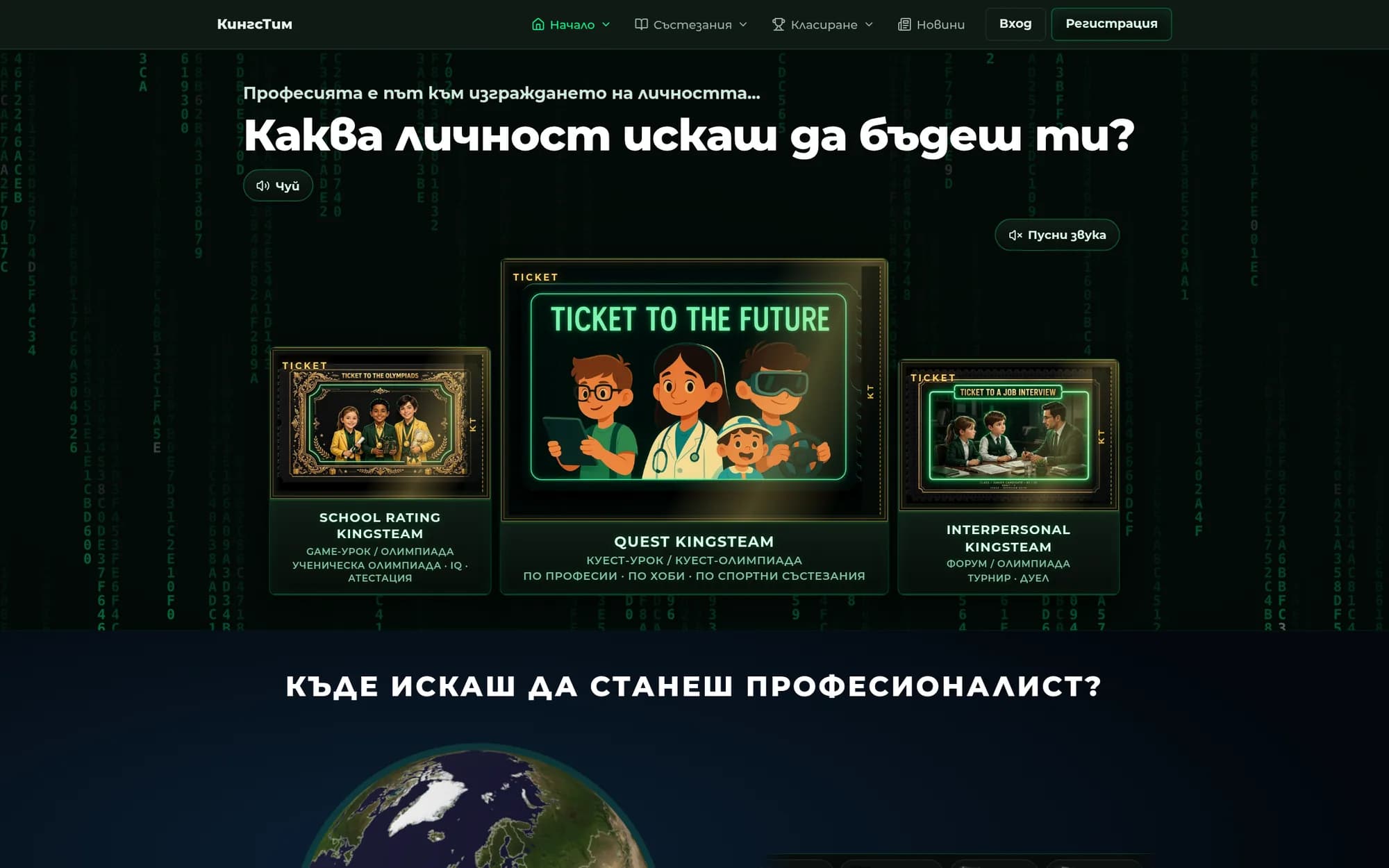
KingsTeam runs vocational quest olympiads for children from kindergarten through 12th grade. The child chooses a country, city and type of competition, signs up for a profession such as “Detective”, “Architect” or “Doctor”, and takes tests in rounds: qualification, final and superfinal. Each round begins with a video lesson, and the questions appear exactly when the lesson reaches them.
This is the most ambitious project we have built in education, and the most demanding client we have worked with. Not as a complaint, but as a number: in three months, we logged 185 separate requests, each with a number, solution and status in a single register that never deletes a row. Some were one word in a text. Others were entire modules, such as the video studio below. The client knew exactly how everything had to look and did not accept “almost”.
The platform was built from scratch. Coding began on 28 June 2026, and the site went live on 15 September, eleven weeks later. On launch day, we released five production versions. Behind the site are 40 pages, around 46 000 lines of TypeScript and 39 database migrations.
There are eight roles inside: student, graduate, teacher, kindergarten teacher, expert, manager, sponsor and administrator, each with its own dashboard. The register contains 3 524 schools and kindergartens in 5 414 populated places, imported from the public MON register without losing a single existing record. 15 professions, 63 tests, 603 questions. The teacher registers and pays for the entire class at once. Each participant receives a personal code, while anyone who passes the final receives a PDF certificate with a QR code that can be verified publicly without displaying the child’s name.
The test engine supports a timer, multiple-choice and open-ended questions, photos and mathematical symbols in questions and answers, video-based tasks and a code word for each round. The home page features a real spinning globe built with three.js, a map of active competitions by region and animated tickets, and the administrator can rearrange it independently.
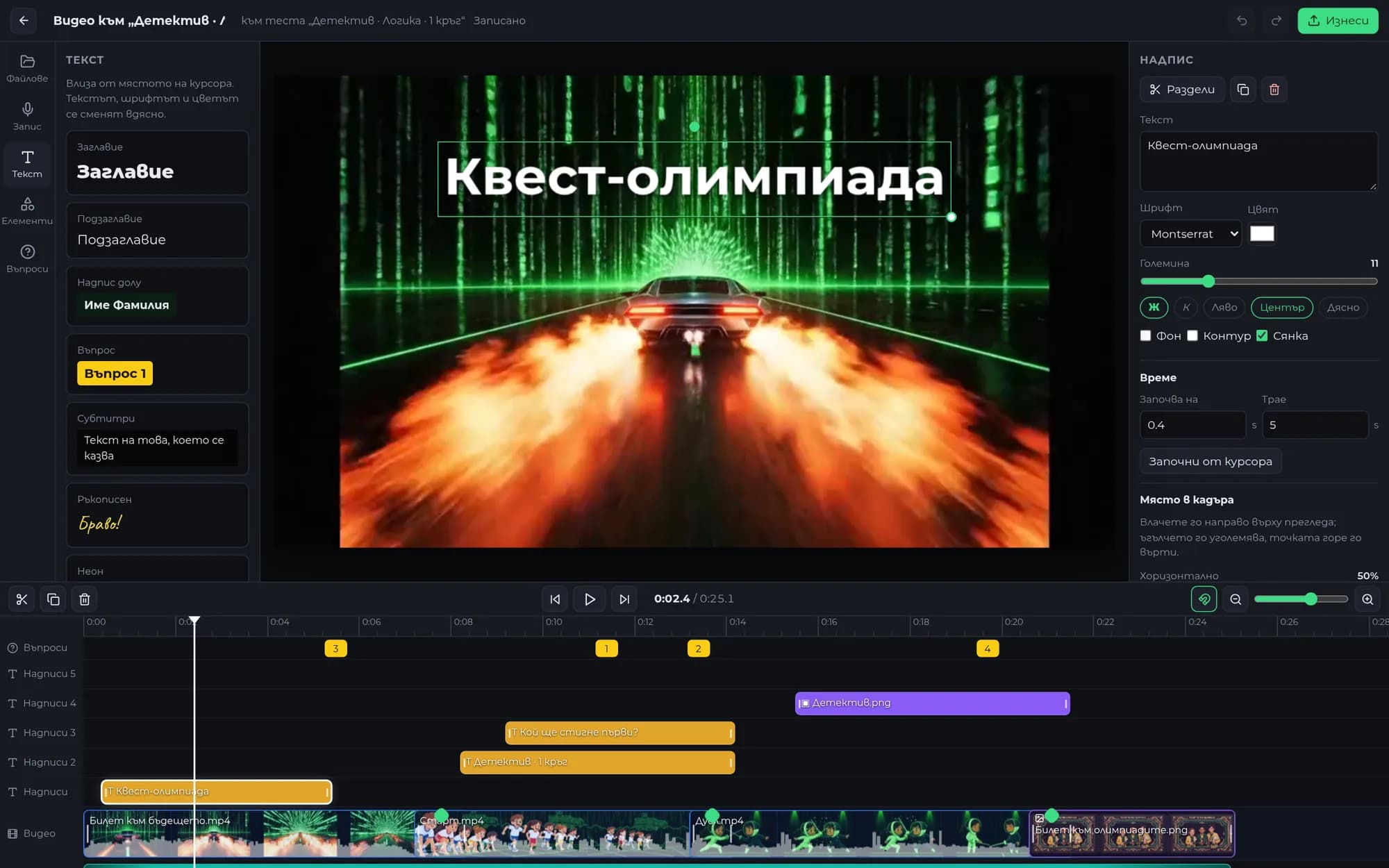
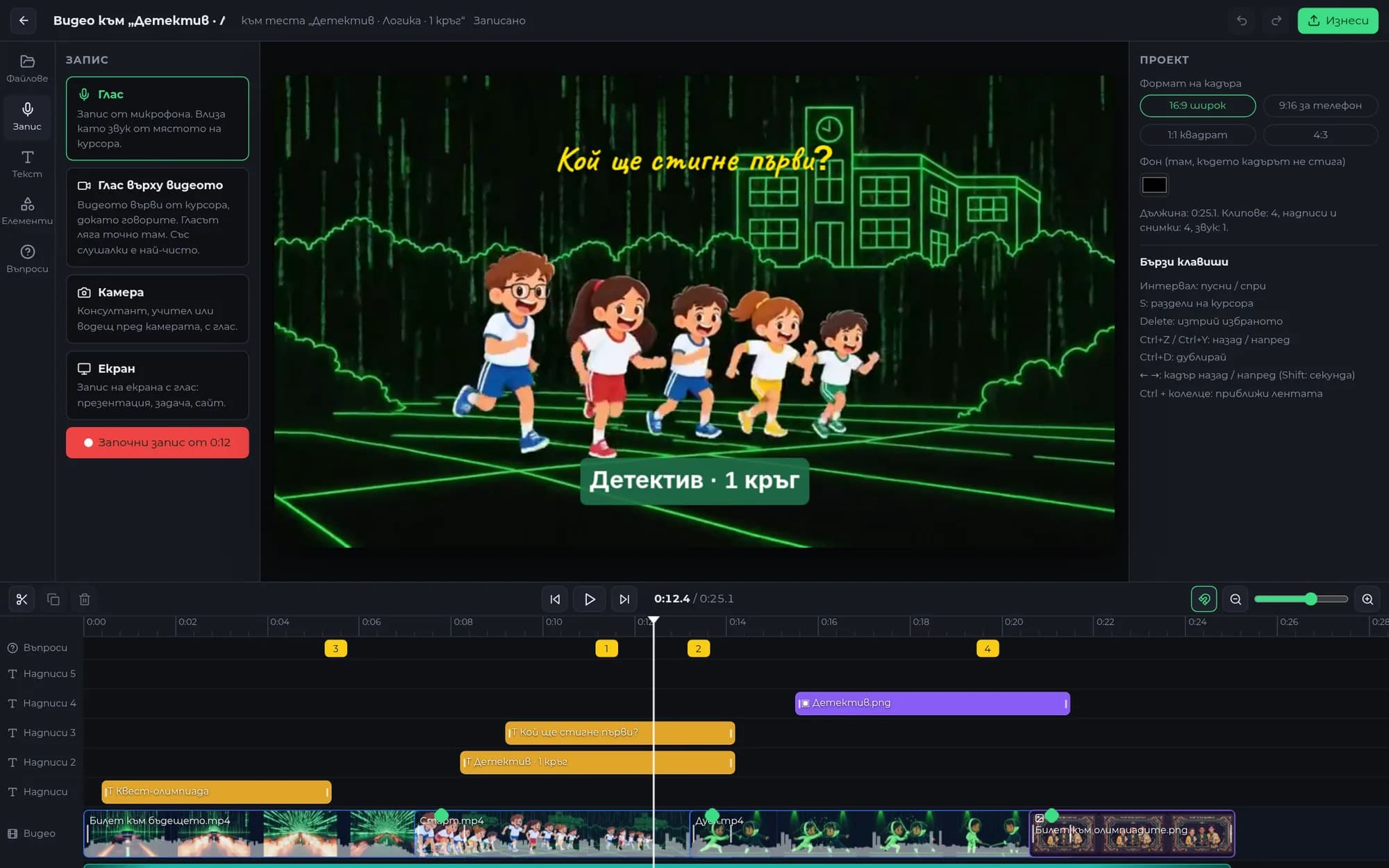
Then came the most difficult request. The olympiad lessons are videos, and the client wanted to edit them independently, directly in the admin panel, like in CapCut or Filmora. Not just upload and trim, but full editing. We built it.
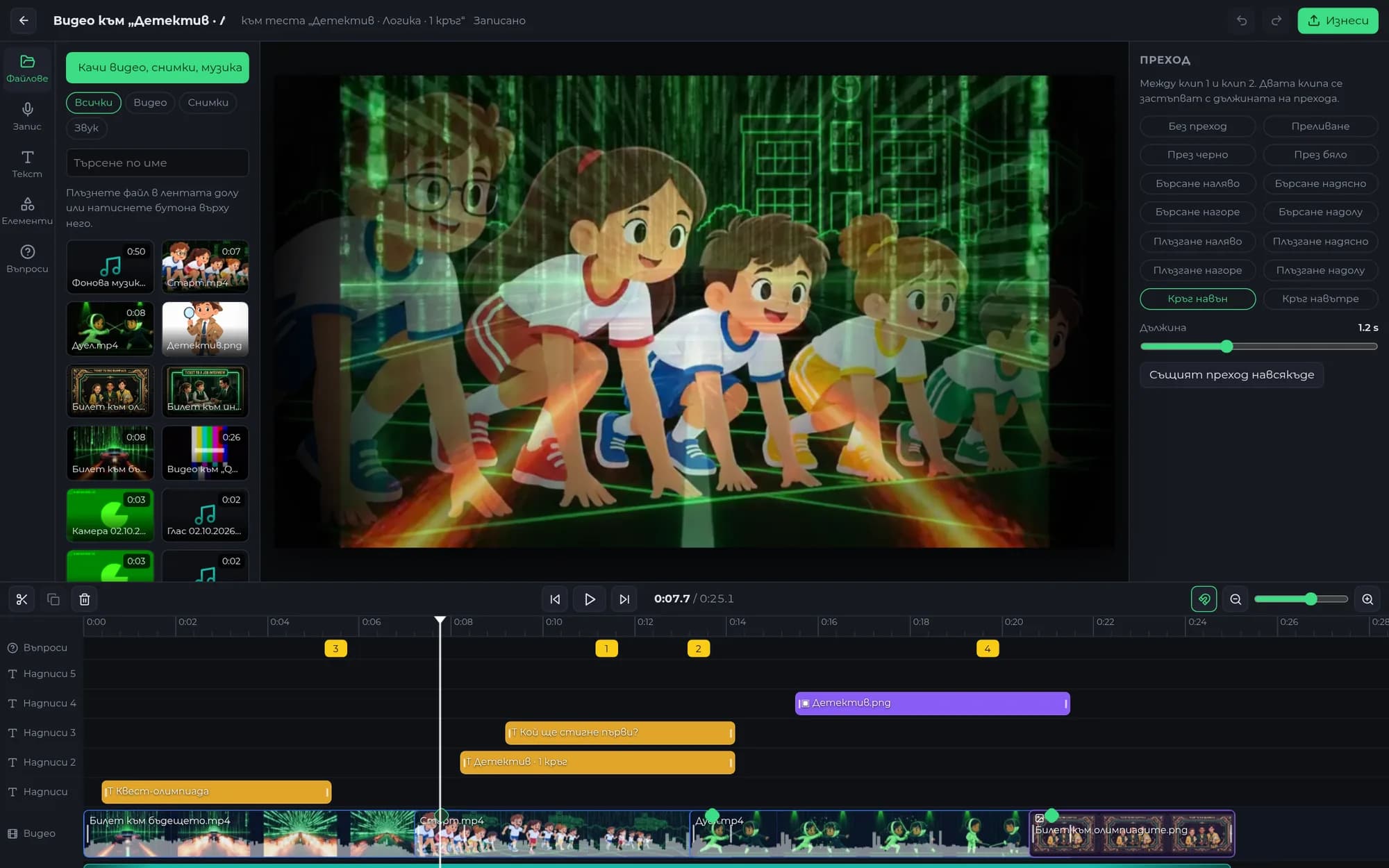
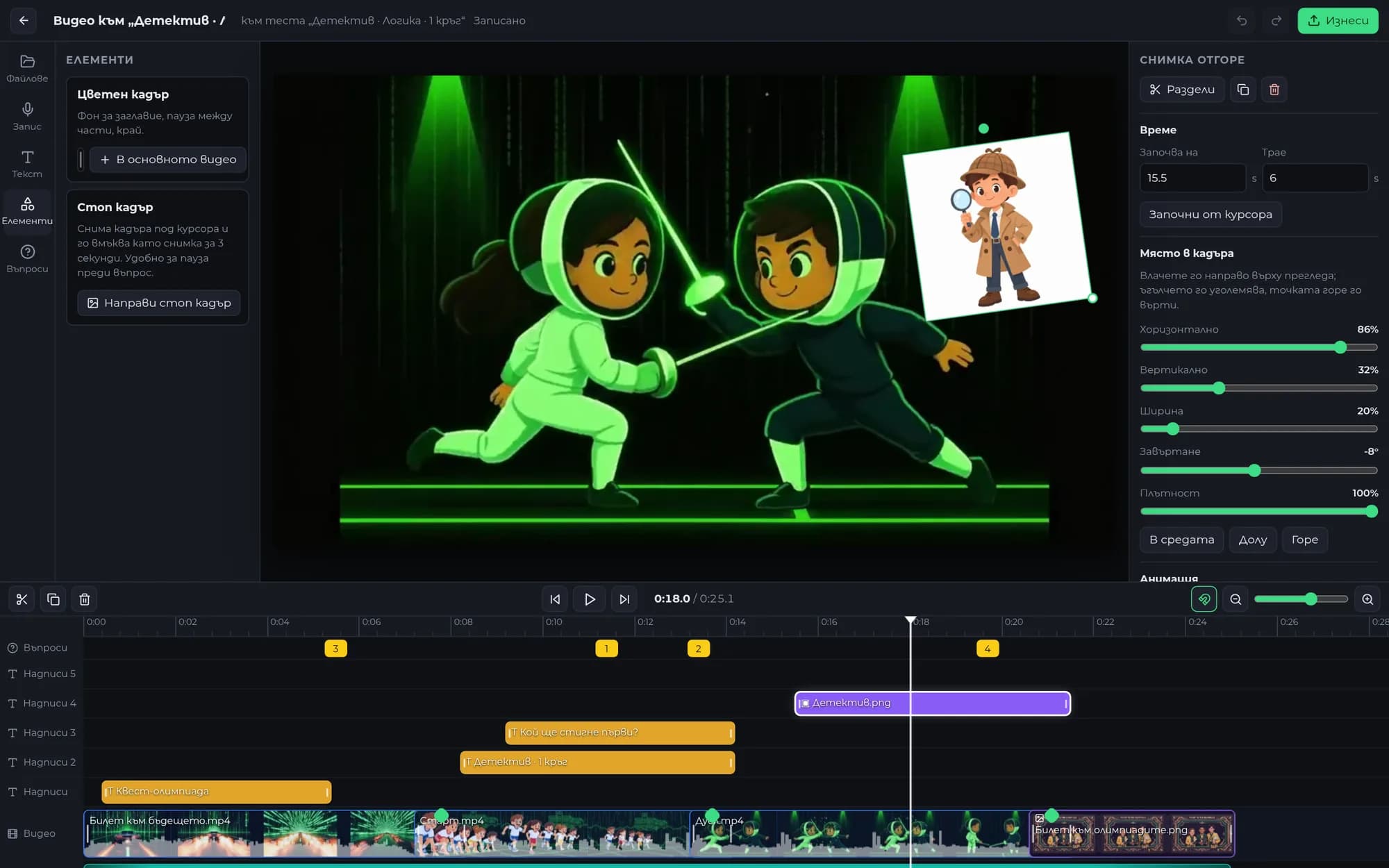
The video studio runs in the browser, with no software to install. Videos, photos and music are dragged onto the timeline. Clips can be trimmed, sped up, muted, colour-adjusted and cropped. There are 13 types of transitions between clips. Captions come in six fonts, with entrance and exit animations, while stickers and picture-in-picture elements can sit on up to eight tracks stacked on top of one another. There is camera and microphone recording directly into the project, four aspect ratios including 9:16 for mobile, undo, keyboard shortcuts and automatic saving.
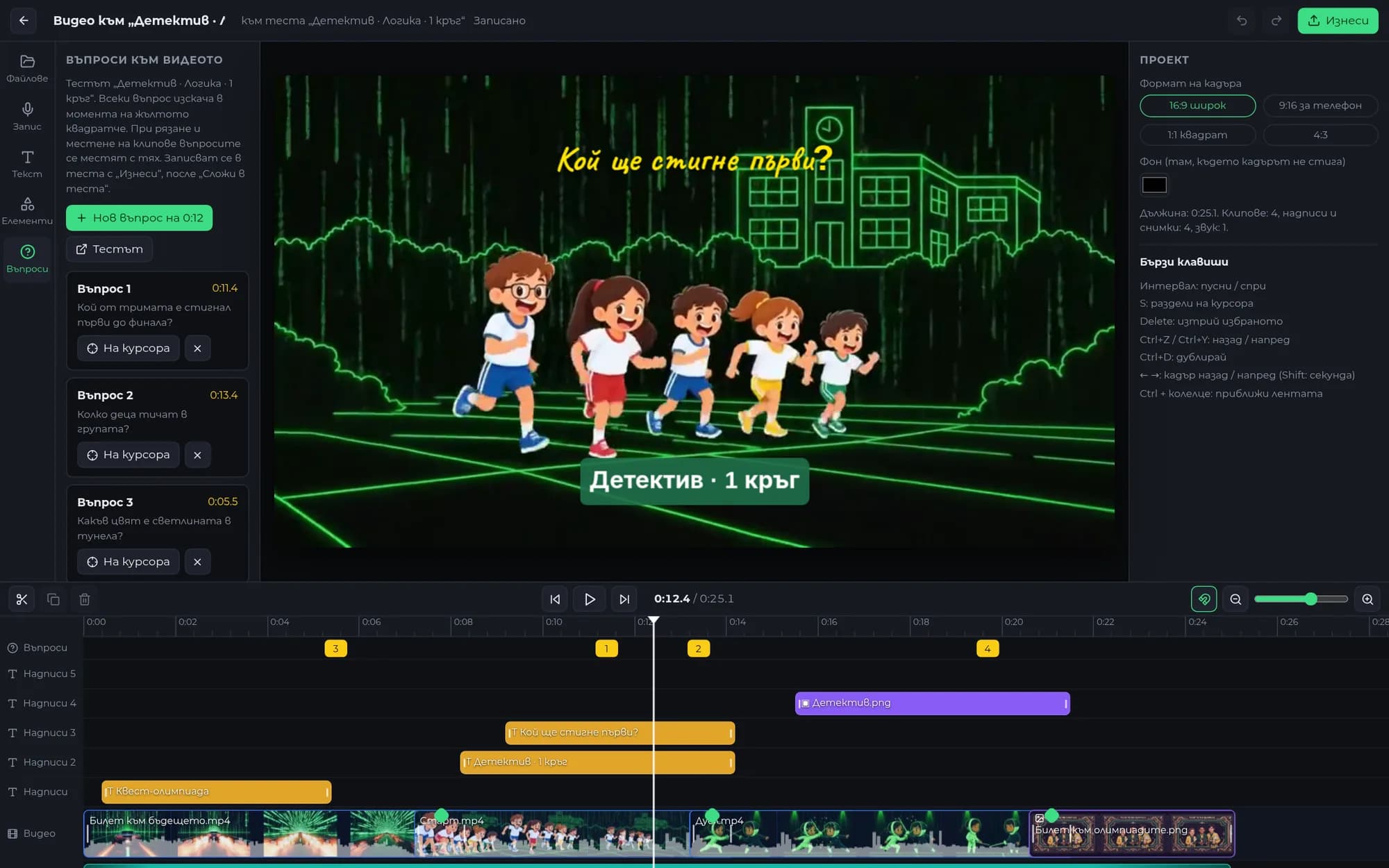
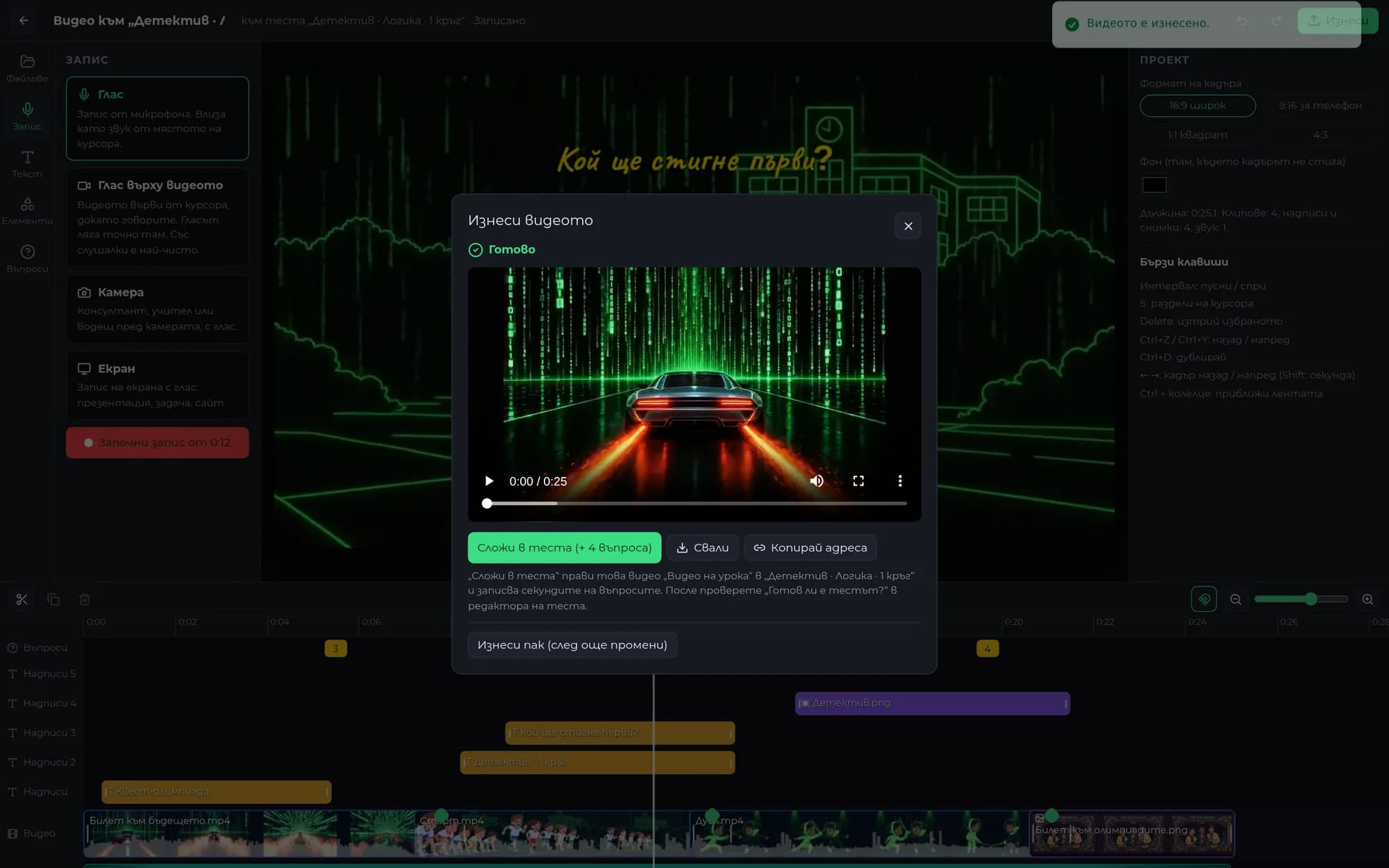
Test questions appear as markers on the timeline itself. Wherever the marker is, the video pauses and the child answers. Move a clip and the questions move with it. One button exports the finished video and adds it to the test together with the questions.
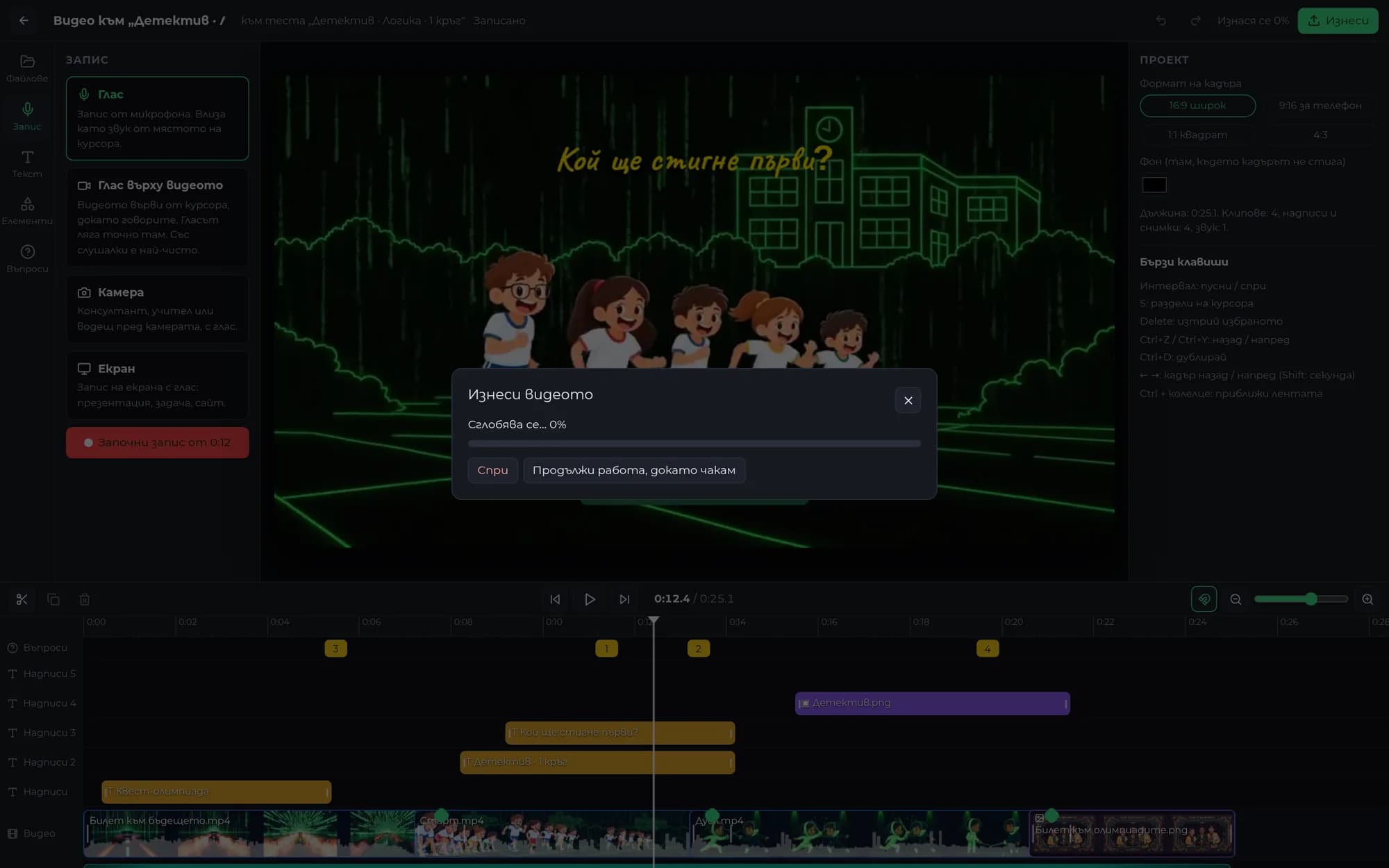
The export is a real video assembled on the server with FFmpeg, not a screen recording. The server has two cores and 2 GB of memory, while the lessons are 35 minutes long in 1080p, so we split the rendering into three steps: first the audio, then each clip and transition separately, and finally everything together with the captions. A two-minute Full HD video exports in about three minutes using 624 MB of memory. The browser preview and the exported file are generated by the same function, so a caption that appears at 3.2 seconds appears at 3.2 seconds in the file too.