Landing Page or Corporate Website: Which One Do You Need?
If you sell one specific service through paid advertising, you will usually need a landing page. If customers compare several services, search for you on Google or want to check out your company, a corporate website is the better foundation. In many cases, the right solution is a corporate website combined with separate landing pages for campaigns.
 Ивелин КириловChief Technology Officer (CTO)
 Владислав БарковManaging Director

What is the difference between a landing page and a corporate website?
A landing page is built around one offer and one primary action. This could be a call, an enquiry, an appointment booking, a request for an inspection or a purchase. Visitors should quickly understand what you offer, who the service is for and what they should do next.
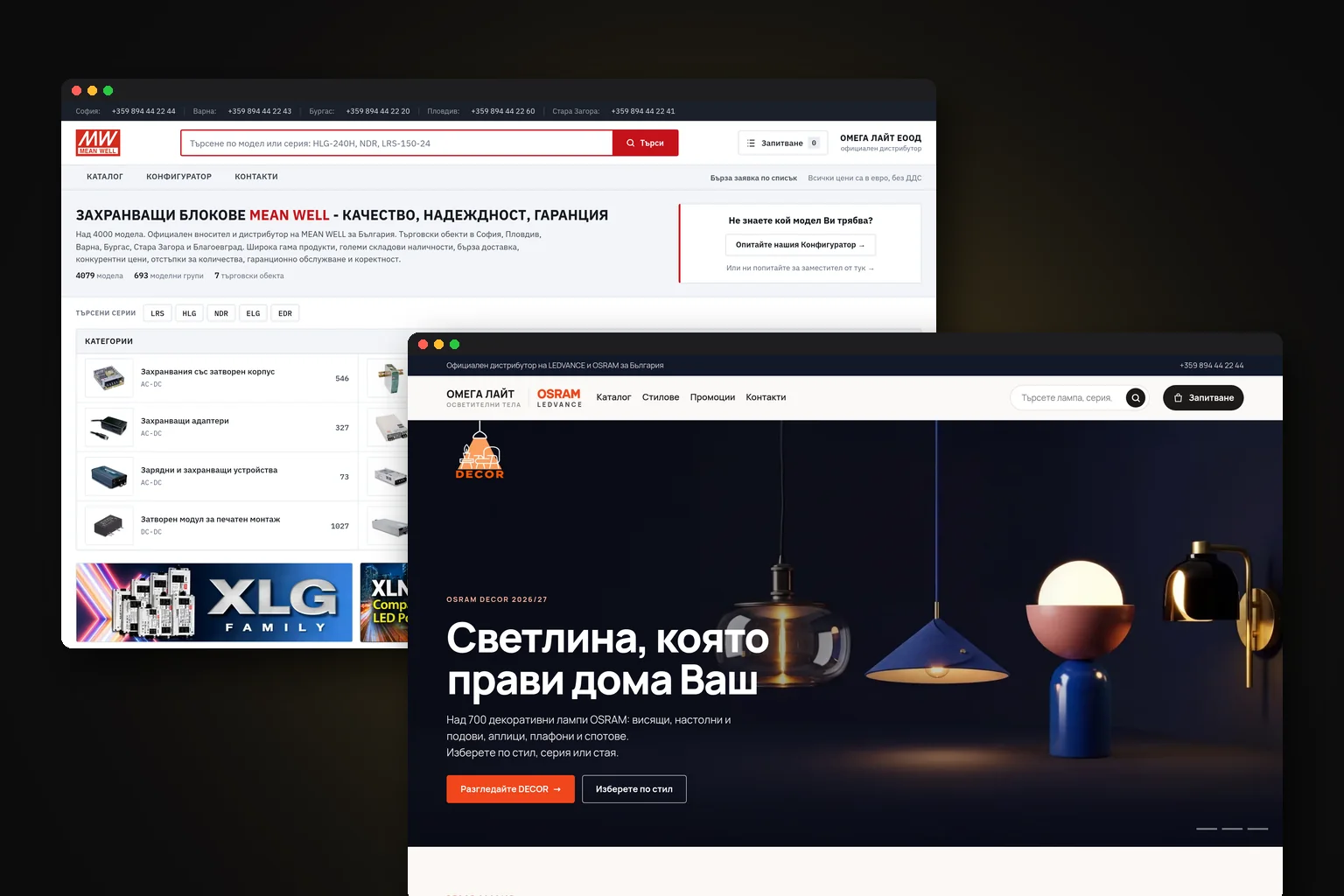
A corporate website presents the business more broadly. It usually includes a home page, service pages, information about the company, a portfolio, FAQs, contact details and content designed for Google. Visitors can explore further because their decision does not depend on one offer and one button.
The difference is not just the number of pages. A landing page limits the available choices and guides visitors towards a specific conversion. A corporate website organises information, builds trust and provides space for different services, customer types and searches.
| Criterion | Landing page | Corporate website |
|---|---|---|
| Primary goal | One offer and one action | Presenting the business and several services |
| Structure | One focused page | Several pages with a menu and internal links |
| Suitable traffic | Google Ads, Facebook Ads and email campaigns | Google, referrals, direct visits and advertising |
| Navigation | Limited or kept to a minimum | Full menu and links between pages |
| SEO potential | Focused on a specific topic | Greater with a well-planned structure |
| Maintenance | Usually easier | More content and technical tasks |
When is a landing page the better choice?
Choose a landing page when you have a clear offer and know where your visitors will come from. This is most often paid advertising for a specific service, a seasonal campaign, a new product or a form for collecting enquiries.
- You are running Google Ads for one service, such as emergency roadside assistance or air conditioner installation.
- You are testing interest in a new service before investing in a larger website.
- You have a limited-time promotion and do not want visitors to get lost in menus.
- You are collecting requests for a consultation, inspection, demonstration or appointment.
- You sell a product with one clear path to purchase or registration.
The ad and the page should speak the same language. If the ad promises “tyre fitting in Burgas twenty-four hours a day,” the page should immediately show the service, area, terms and phone number. It makes no sense for the click to lead to a homepage with ten different services.
A good example is the Dobrite Hamali project. The page is built around enquiries, a calculator, Google Ads integration and call tracking. This model makes sense when value lies in quick contact rather than browsing the company’s history in detail.
When do you need a corporate website?
A corporate website is a better fit when you offer several services, work with businesses, or customers compare providers before getting in touch. It gives you room for a portfolio, certificates, your work process, team, frequently asked questions and detailed descriptions.
- You offer different services or work with several types of customers.
- You want to attract visitors through organic search, not just advertising.
- Customers want to see completed projects, partners or technical capabilities.
- You need a blog, location pages or content for different industries.
- The website needs to be a long-term foundation for advertising, SEO and sales.
A B2B customer rarely makes a decision based on a single “Submit enquiry” button. They may check how you work, who you have worked with, what your timelines are and whether you understand their problem. If these answers are missing, advertising may bring traffic, but not enough high-quality conversations.
With a corporate website, structure is part of the sales process. For a construction company, for example, the important elements are its services, portfolio, process, service areas and enquiry form. For a software company, integrations, support, case studies and the way it works matter more. Generic copy along the lines of “we offer everything” rarely does the job.
How much do a landing page and a corporate website cost?
The price is not determined by the number of pages alone. For a landing page, the copy, design, forms, calculators, tracking and integrations all affect the cost. For a corporate website, the number of services, custom templates, multilingual support, blog, portfolio, admin panel and connection to a CRM or other software all add to the scope.
| Solution | Quoted range | What it most often includes |
|---|---|---|
| Landing page | €500-€5,000 | Offer structure, design, mobile version, form, tracking and publishing |
| Small corporate website | €500-€5,000 | Homepage, services, company information, contacts, admin panel and SEO foundation |
| Larger corporate website | €500-€5,000 | More services, portfolio, blog, multilingual support, calculators, integrations and custom structure |
The range is an indication based on actual quotes, not a rate based on the number of sections. If you already have the copy and images, visual identity and a clear structure, the project is usually easier to plan. If new content, photography, a calculator, CRM integration or different campaign versions are needed, the scope increases.
With a landing page, the most common mistake is cutting corners on content and measurement. A beautiful page without proper tracking of forms, phone clicks and the source of enquiries will not show whether the advertising is working. With a corporate website, the opposite problem is an overly broad scope from the outset: many pages are created that nobody updates later.
Can a landing page rank on Google?
Yes, but a single page has less SEO potential than a well-structured corporate website. It can rank for a specific search if the content is useful, the page is technically sound, the offer matches the searcher’s intent and the domain has sufficient authority.
The problem is scale. If you offer installation, repairs and subscription-based maintenance, or operate in several cities, one page can hardly address all searches in detail. Separate pages allow for more precise titles, internal links, frequently asked questions and specific examples.
That is why a landing page should not automatically be called an SEO page. It is strong when traffic is concentrated and the goal is specific. A corporate website is a better foundation for consistent organic traffic, but only if its pages are written for customers’ real searches rather than filled with generic advertising phrases.
How do the two options work with Google Ads and Facebook Ads?
With Google Ads, a landing page often has an advantage because it matches the keyword and the ad message. Visitors arrive at exactly what they searched for. This also makes measurement easier when forms, phone clicks and enquiries are configured correctly. If you need campaign management, see Google advertising.
With Facebook and Instagram ads, users often have not actively searched for the service. The page needs to explain the problem, provide proof and address objections. A landing page is suitable for a specific audience, but a corporate website can help if the person wants to check out the company first.
Don’t send every ad to the homepage just because it contains more information. More information does not mean better results. What matters is the match between the ad and the page, a clear call to action and making sure the enquiry reaches the right person on the team.
How do you choose without paying twice?
- 01Describe one specific action
Write down what the visitor needs to do: call, request a quote, buy or book an appointment. If you have several completely different actions, you probably need a broader structure.
- 02List your services and customer types
Map out your services, service areas and main customer groups. If each group has a different problem, argument and buying process, do not combine them on one general page.
- 03Determine where your traffic will come from
If you already have a budget for Google Ads or Facebook Ads, you can start with a landing page. If you rely on Google search, referrals and long-term content, plan a corporate website.
- 04Plan measurement before design
Define what counts as a conversion: a submitted form, a click on a phone number, a booking or a purchase. Set up your events and lead delivery process before launching the campaign.
- 05Build the first version with room to grow
A landing page can later become a page for a specific service on your corporate website. A corporate website can also start with a small number of priority pages instead of being filled with content nobody will maintain.
Do you need both options?
Often, yes. A corporate website can be the foundation for trust, SEO and presenting all your services. For each important advertising campaign, you create a separate landing page that focuses exclusively on the specific offer.
This does not mean copying the same page over and over. Each page should have a different intent, message and tracking setup. A campaign for elevator maintenance raises different questions and requires different proof than a campaign for a new installation.
It is important for both types of pages to share the same company details, terms and contact information. That way, you avoid different phone numbers, outdated prices or promises your team cannot keep. With multiple campaigns, it is worth connecting the forms to your CRM so leads do not end up in a separate email inbox.
What should you check before commissioning the project?
- Who will write the copy and prepare the proof: photos, projects, certificates and testimonials?
- Will the page work well on mobile, where a large share of your ad traffic comes from?
- How will forms, phone clicks and leads from different campaigns be tracked?
- Do you have access to the domain, hosting, advertising accounts and analytics tools?
- Will you be able to change a service, price, opening hours or FAQ yourself after publication?
- What will happen if you add a new service or CRM integration later on?
A good proposal covers more than just the design and number of sections. It explains what will be measured, who is responsible for the content, how leads will be delivered, and which access rights and permissions remain after the project is completed. These details matter once the ads start bringing in visitors and your team has to handle the enquiries.
Frequently asked questions
- Is a landing page cheaper than a corporate website?
- Usually, yes, because it has one goal and a narrower scope. The price depends on the copy, design, calculators, forms, tracking and integrations-not just the number of sections.
- Can I use a landing page without a corporate website?
- Yes, if you have one service, a specific offer and a clear source of traffic. For building trust, SEO and presenting several services, a corporate website is usually the better foundation.
- Which is better for Google Ads: a landing page or a homepage?
- A landing page is usually more suitable when the ad promotes a specific service. It matches the search intent more closely and reduces distractions, but it needs proper tracking for forms and calls.
- How long does it take to build a landing page?
- A simple project can be ready in a few business days if the offer, copy and images have been agreed on. Complex forms, calculators, integrations and multiple ad variations extend the timeline.
- Can a landing page become part of a corporate website?
- Yes. Ideally, you should plan a structure from the start that allows the page to remain a standalone campaign or later become a page for a specific service.