Custom Software or an Off-the-Shelf Program: How to Decide, with Prices from 98 Quotes
Choose an off-the-shelf program when your process is the same as that of thousands of other companies and you can work by its rules; choose custom software when the rules are yours, you need integrations with other systems, or you want the code and data to be yours. Based on 98 quotes we sent by 14 August 2026, a custom system costs €3,000-€29,300, most often around €8,600, plus €100-€350 per month for support after launch.
 Ивелин КириловChief Technology Officer (CTO)
 Владислав БарковManaging Director
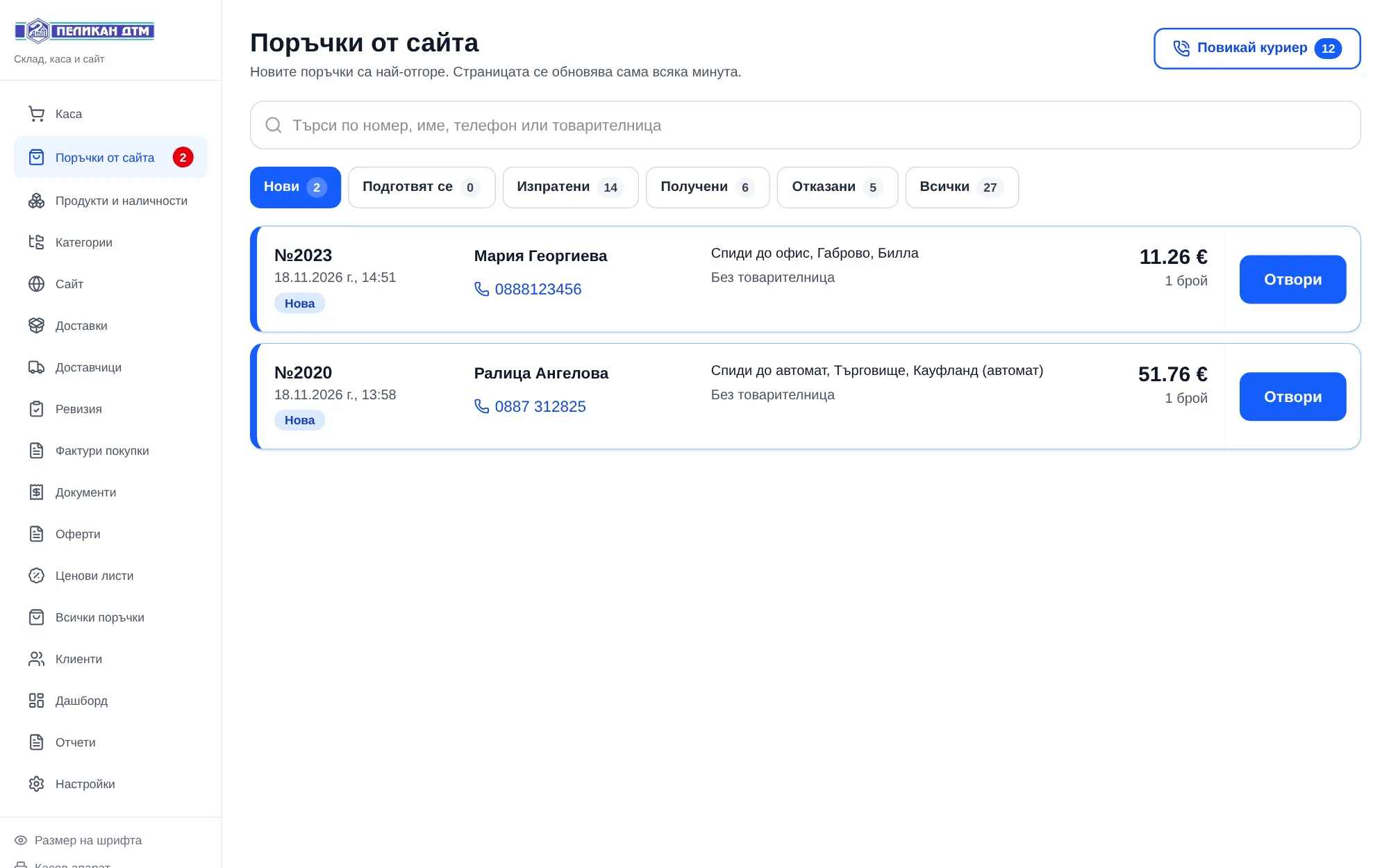
This is the answer in two sentences. The rest is how to assess your situation without taking our word for it or the word of the off-the-shelf program's salesperson. The image above is from a system we built to order: orders from the Pelikan DTM online store go directly into the warehouse and checkout (the customers in the image are fictional).
What We Mean by “Off-the-Shelf Program” and “Custom”
An off-the-shelf program is a product that already exists, is sold to many companies, and is paid for with a licence or subscription: inventory management software, accounting software, a CRM with a monthly fee, pharmacy or taxi software. You configure it, but you do not change it. If something is missing, you wait for the manufacturer to add it, if they add it at all.
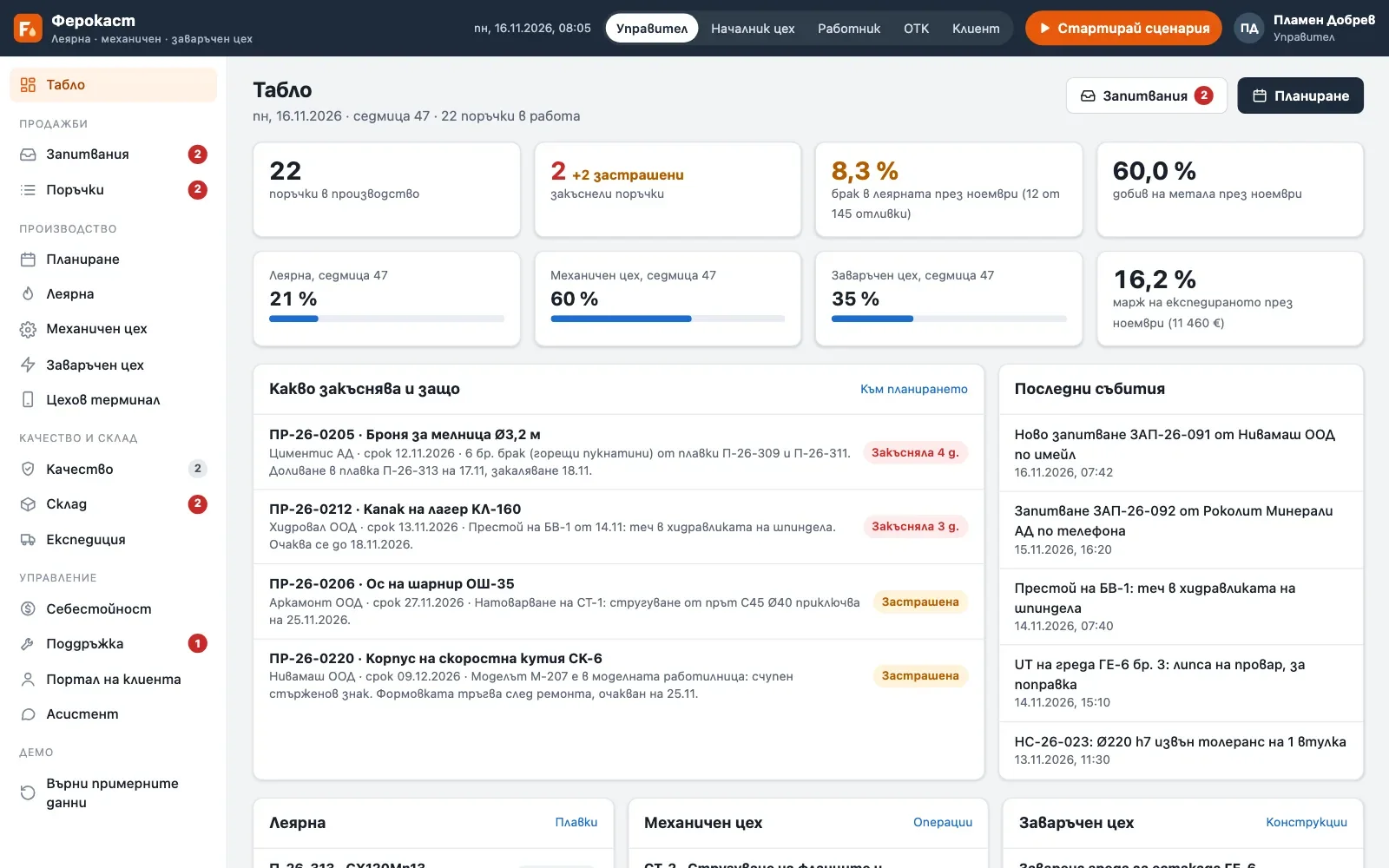
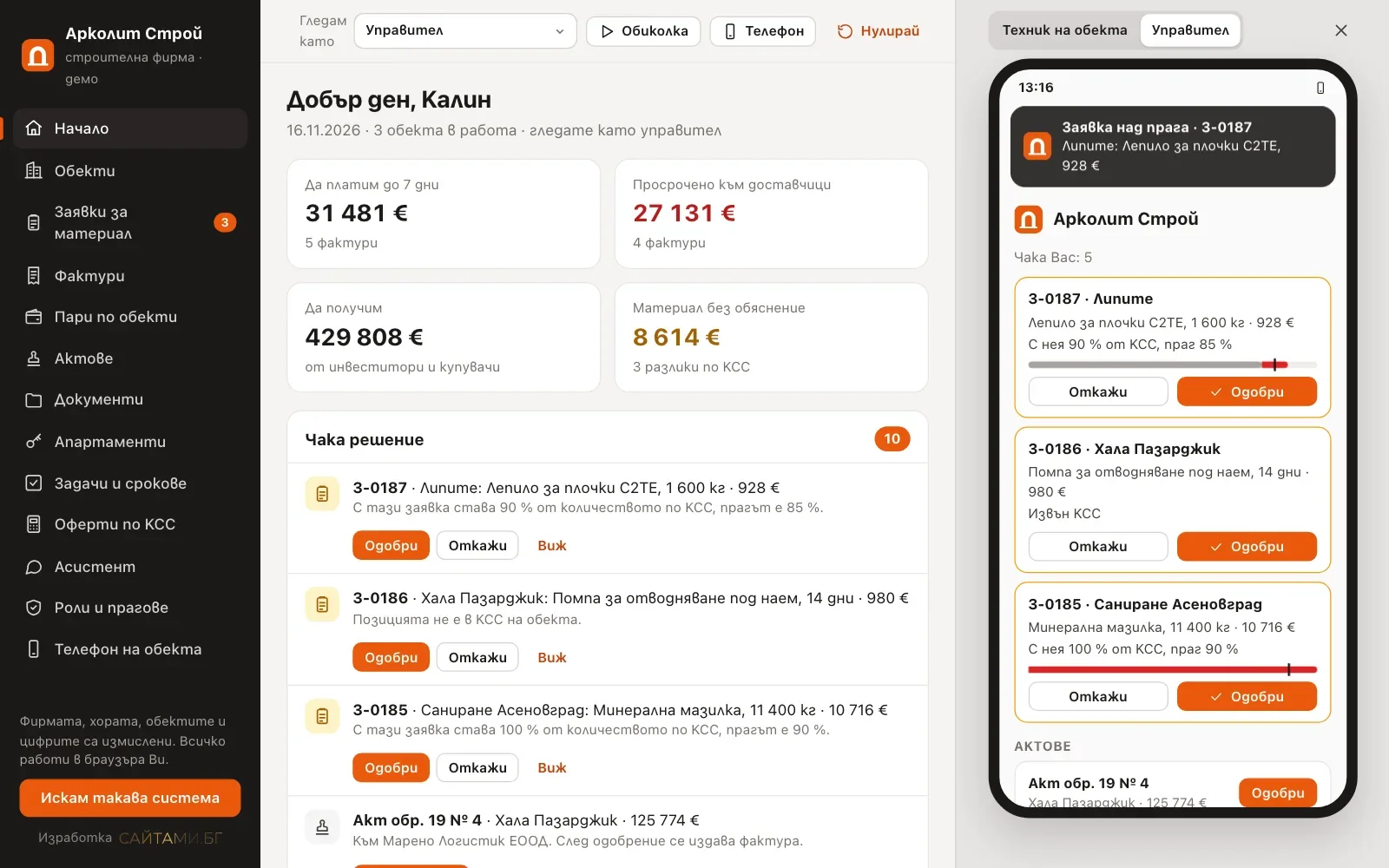
Custom software is a system written for one company, according to its process. You pay once for development, the code and data are handed over to the company, and every subsequent change is commissioned separately. Our examples: the Pelikan DTM system for inventory, checkout, documents and an online store, LiftexPro for companies that maintain elevators, and the taxi dispatch system, which anyone can open as a demo.
There is also a third option, which we describe below: an off-the-shelf program for the standard part and a small custom system around it.
The Four Questions That Settle the Choice
Our comparison page, custom ERP or off-the-shelf ERP, lays this out in a table with five criteria. Here, we turn them into questions you can answer yourself before speaking to anyone.
1. How Much of Your Process Is Standard?
An invoice, a receipt, stock by item, VAT by rate: these are the same for everyone, and off-the-shelf programs have handled them well for years. If that is all you need, the off-the-shelf program wins and the question is settled.
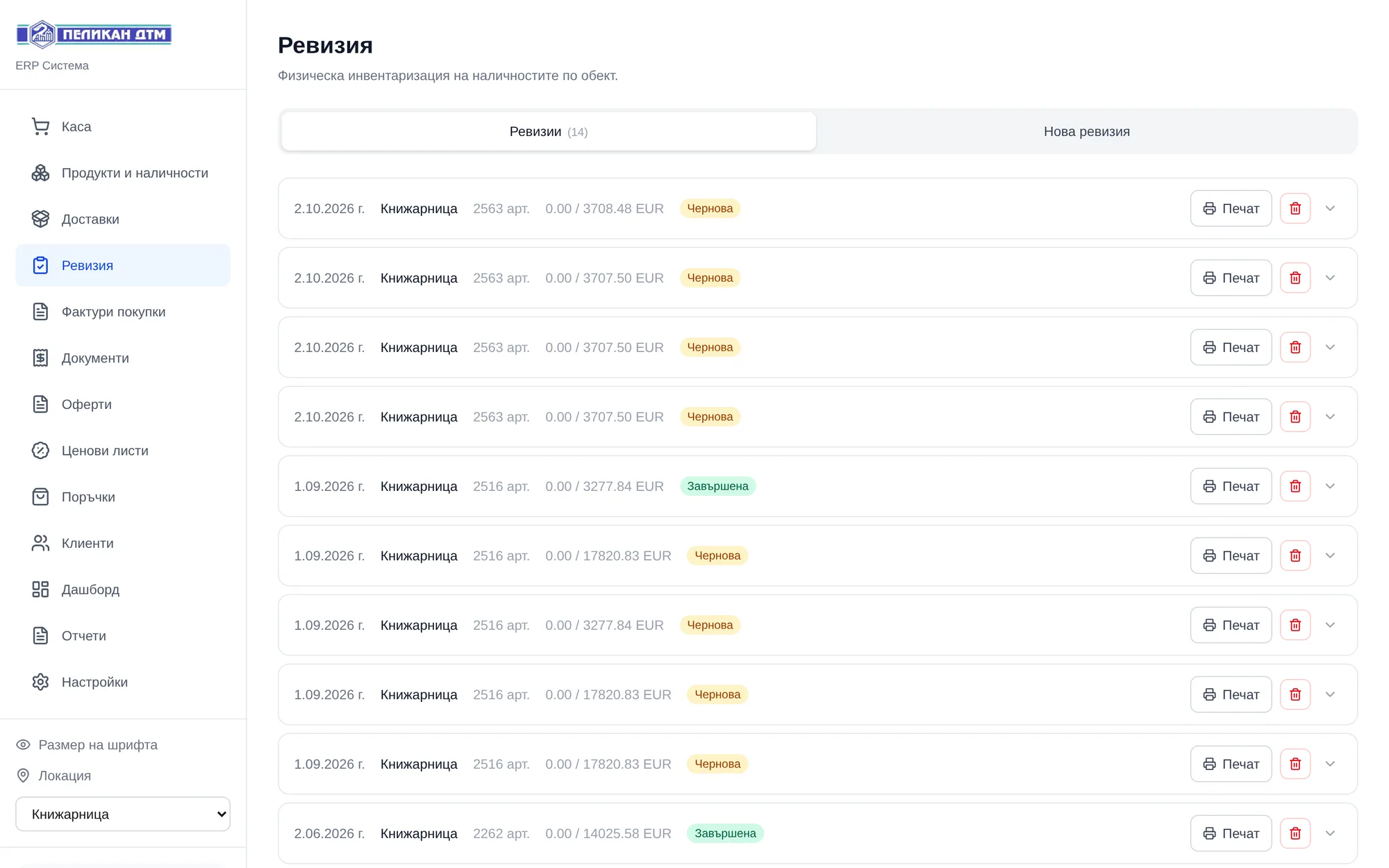
The question gets interesting when there is a “but”. Four prices per item depending on who it is sold to. Two locations with transfers between them. A supplier order accepted line by line that automatically replenishes the warehouse. An inventory count of 2 500 items saved as a draft while counting, distinguishing a counted zero from an item not yet counted. This is the real list from the Pelikan DTM system, and none of these features was standard in the programs the company used before.
Rule of thumb: if you can describe everything you need using the words from the off-the-shelf program's advertising, choose the off-the-shelf program. If your description starts with “for us, it is a little different because”, keep reading.
2. What Does the System Need to Connect To?
Most companies today have a website or online store, a courier, a bank, a phone system, and an accountant using another program. An off-the-shelf program offers the integrations its manufacturer has chosen to build. If your store, courier, or phone system is not on the list, the integration either does not happen or is done manually, meaning someone re-enters the data.
With a custom system, each integration is a separate task described in the quote. At Pelikan DTM, an order from the online store arrives in the system with the address for Spidi, while the waybill, label, and courier are handled with a single button. This is what most often tips the choice toward “custom”: not one screen, but one integration that prevents someone from sitting there re-entering data.
3. Who Owns the Code and Who Owns the Data?
With a subscription, the manufacturer owns the code, and data can be exported only to the extent the product allows. If the manufacturer discontinues the product, raises the price, or is acquired, you are wherever it is.
With a custom system, the code, database, and access credentials are handed over with the project, and you can continue with another team. For a small company with one standard process, this is not an argument: renting is cheaper than owning. For a company whose business runs entirely through the system, the question “what happens if it is gone tomorrow” is the first question, not the last.
4. How Quickly Do You Need to Get Started?
An off-the-shelf program goes live after configuration, from a few days to a few weeks if the process is standard. A custom system goes live after the first module is built. With us, the project goes through a task description, two or three precise questions with a price range, a demo of the main screens, a written quote with scope, stages and timeline, and staged development, with each completed stage demonstrated and deployed for you.
If you need to be working by next Monday, an off-the-shelf program is the only honest answer. If you have two or three months and the problem has cost you more over the past year, you can afford to solve it once.
The Price: What Our Quotes Show
The figures are based on the quotes we have sent, grouped by type of work. “Most often” is the value around which most quotes clustered; where the quotes are too widely spread, we do not give one.
| Type of work | Range | Most often |
|---|---|---|
| Custom system (ERP, CRM, business software) | €3,000-€29,300 | €8,600 |
| Online store | €840-€6,300 | €1,950 |
| Website | €500-€5,000 | €800 |
| New mobile app (6 quotes available until 16 November 2026) | €2,900-€15,400 | not specified |
| Post-launch support | €100-€350 per month | not specified |
Based on 98 of our quotes as of 14 August 2026, excluding mobile apps, which were measured separately. Prices are shown exactly as stated in the quotes.
What moves the price within the €3,000-€29,300 range: how many modules are needed (inventory and sales is a smaller project than inventory, production, delivery and service), how many roles, how many integrations (each one is a separate piece of work), how much data needs to be transferred from Excel or the old software, and how precisely the process is described. If the process is unclear, we describe it together first, before preparing a quote. Details: How much custom software costs.
How to compare the total cost over three years
The mistake we see most often: comparing the quoted price of a custom system with the monthly fee for off-the-shelf software. These are not the same figure. The calculation that is worth making:
- Off-the-shelf software: the subscription or licence for 36 months, plus the paid modules you will need, plus setup and training, plus the cost of manual work for integrations the software does not have. Someone re-entering orders is a cost every month.
- Custom software: the quoted price, plus 36 months of support (with us, €100-€350 per month), plus any changes you request during that time.
If the first figure is lower and your process is standard, off-the-shelf software is the right choice, and we will say so directly. If the second figure is lower or close, while also giving you ownership and integrations, a custom system is the better deal.
When off-the-shelf software wins
- Pharmacy: you need pharmacy software integrated with NZOK and electronic prescriptions. This is an off-the-shelf product, and we do not build it.
- Accounting: your accountant's software. A custom system can send data to it, but cannot replace it.
- Taxi company with a few cars: a subscription-based dispatch system. A proprietary system does not pay off at this scale.
- Small shop or warehouse with a single location and standard documents: off-the-shelf inventory software.
The common thread: one location, a process shared by thousands of other companies, and no "but".
When custom software wins
A company with two or more locations, whose pricing, transfer and stocktaking rules are its own. A company whose inventory needs to work alongside an online store, production or service in a single stock balance. A company with a field team that records its work from their phones, like the technicians at LiftexPro. A company that sells to other companies and wants customers to see their own prices and documents. A company where five Excel spreadsheets have grown up around the off-the-shelf software because "the software can't do that".
The third option: off-the-shelf for the standard parts, custom for what is yours
Not everything needs to be new. A combination we use often: the accounting software stays; the pharmacy or taxi software stays where it is certified or simply sufficient; only the part no off-the-shelf product can provide is built to order: the customer portal, the connection between the store and warehouse, the owner's report, the field team's app. This makes the system smaller, cheaper and faster to launch.
What the quote should include, whoever provides it
- Scope: which modules, roles and integrations, listed explicitly, not "a complete system".
- Stages and what you receive at the end of each stage.
- An exact price for the described scope and how a change in scope will be priced before work begins.
- What happens after launch: archives, updates, fixes, and how much they cost.
- Who owns the code and how the data can be exported.
- A demo or working example that you can open before deciding. Our demo systems open without registration, for example the general ERP demo.
A quote without these six points compares apples with oranges, whatever it says.
Let's review your case
Describe your process in one email or one call: we ask two or three questions and give you a price range before preparing a quote. Phone +359 2 423 4955, email [email protected], or the form below. What we build and working examples: Custom software development.
Frequently asked questions
- Is custom software more expensive than off-the-shelf software?
- Almost always at the beginning. Over three years, often not, especially if you include paid modules, manual work for missing integrations, and the fact that the code is yours at the end of the period. The 36-month calculation in the article gives the answer for your case.
- How much does custom software cost?
- Based on 98 of our quotes as of 14 August 2026, a custom system costs €3,000-€29,300, typically around €8,600. Support after launch costs €100-€350 per month.
- Can we start with a small budget?
- Yes. We first build the most important process, usually inventory, customers or orders, and add modules as the first one is used. The starting price in our system quotes is €3,000.
- How long does it take?
- It depends on the scope, so the timeline is set out in the quote, broken down by stage. The first module usually takes weeks, not months. Off-the-shelf software goes live faster, and if timing is decisive, it is the right choice.
- Can a custom system work together with the software we already have?
- Yes. The accounting, pharmacy or taxi software stays in place, while we build only what it lacks and connect it to the custom system.
- How can I tell whether my process is standard?
- Describe it using the words from the off-the-shelf software's advertising. If you can do that without a single "but in our case", it is a standard process, and off-the-shelf software is the better choice.