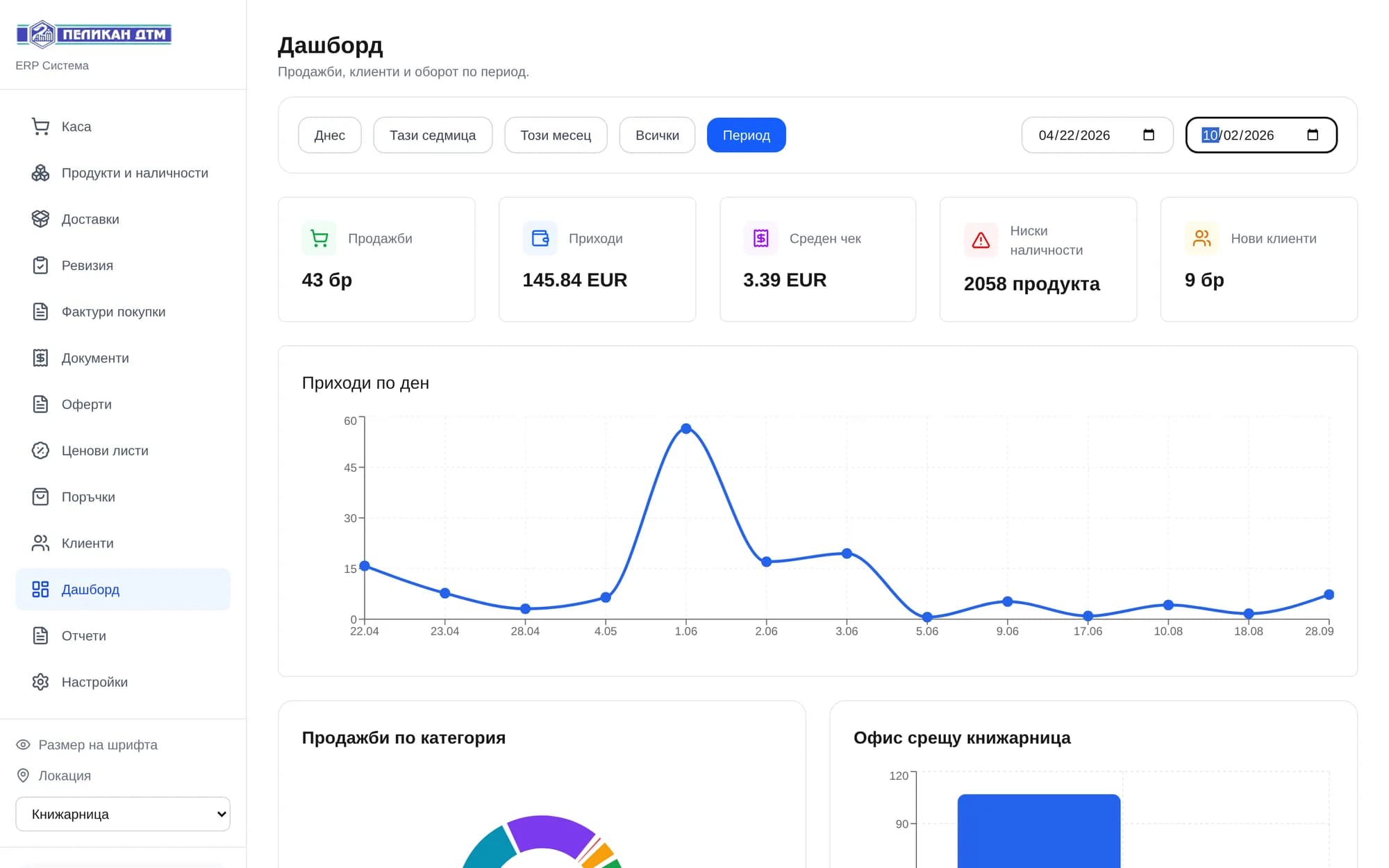
Goods are received with a scanner. A delivery starts as a supplier request, is received line by line with the purchase price, and automatically adds the goods to stock. A purchase invoice can create a new product directly from its line, without leaving the document. Each product has a barcode, category, supplier and as many prices as you have locations and customer groups: at Pelikan DTM there are four-cost, wholesale, shop and bookshop.
When goods have an expiry date, they are received with a batch number and expiry date, and at the time of sale the system issues the package that expires first. No one has to remember expiry dates. The manager can see what expires next month and what is below the minimum stock level, by location and batch. This is also a common question from food retailers: incoming control with batch numbers and weighed products, using a label from the scale or a direct connection to it.
A transfer between locations is one document with an unlimited number of lines, printout before saving, and valuation at the price of the location receiving the goods. Stocktaking is the physical count: it works with thousands of products at once, is saved as a draft while counting is in progress, and distinguishes a counted zero from an uncounted product, so nothing is reset by mistake.
The till sells with a scanner or by searching by name and does not allow stock that is unavailable to be sold. Reports are for the manager: sales by location and period, low stock levels, movements by product and stocktake discrepancies. Everyone sees only their own section, while the audit log records who changed what.