What we build
To us, business software means any system a company uses for its day-to-day work: requests and orders, inventory and deliveries, field teams, projects and installations, invoices and payments, a price catalogue for business customers, and management reports. An ERP system is one type of business software; companies often need less than an ERP and more than a spreadsheet.
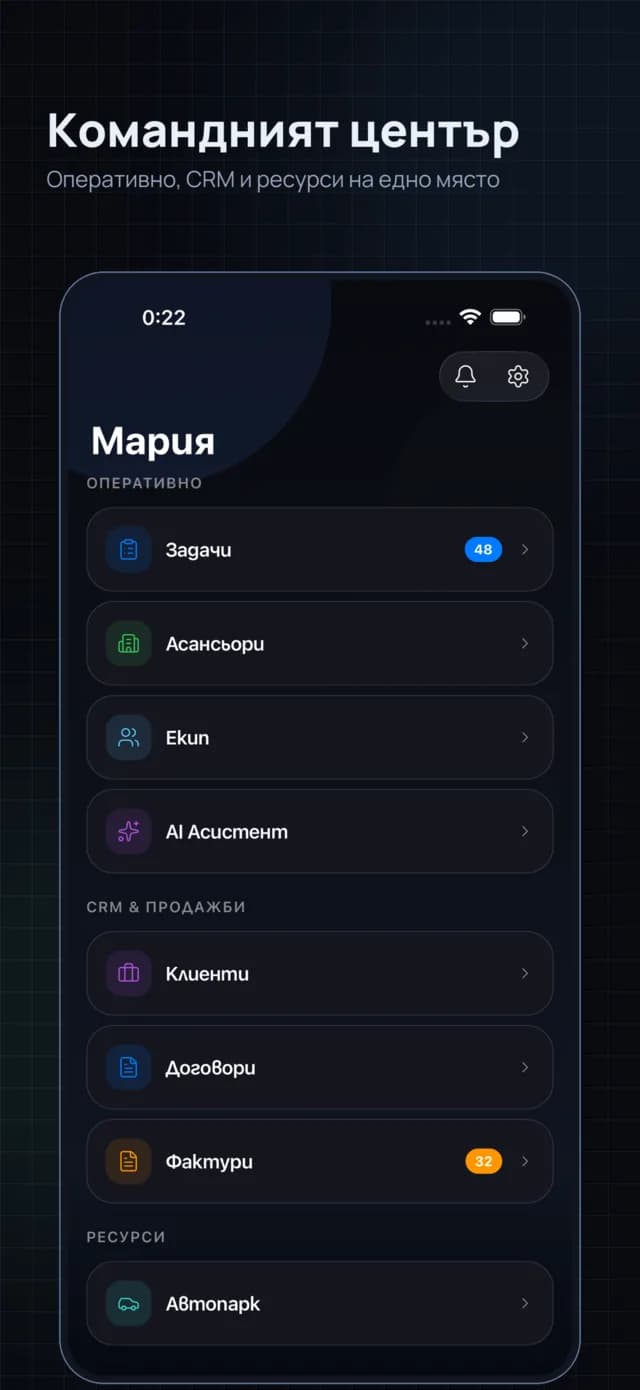
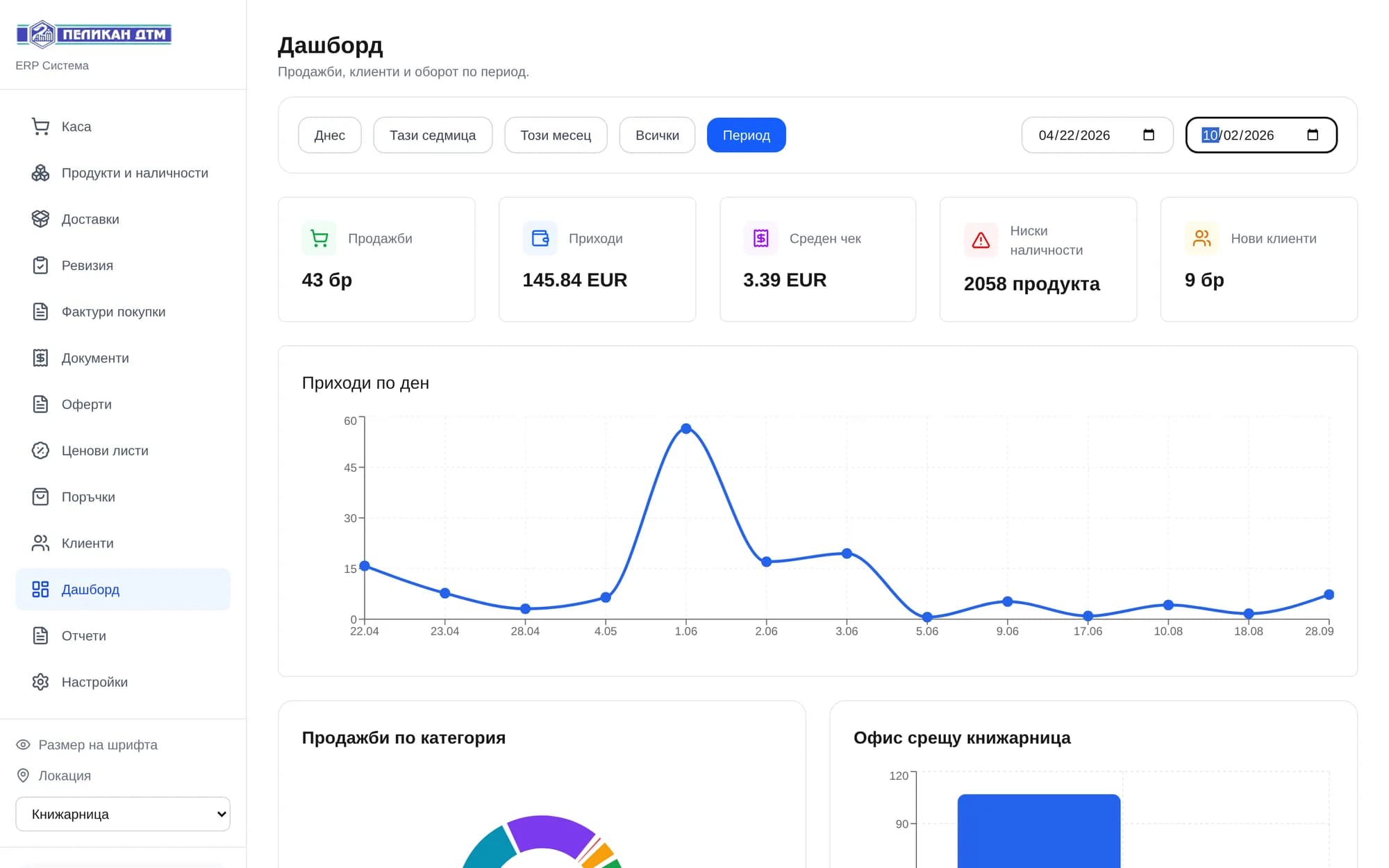
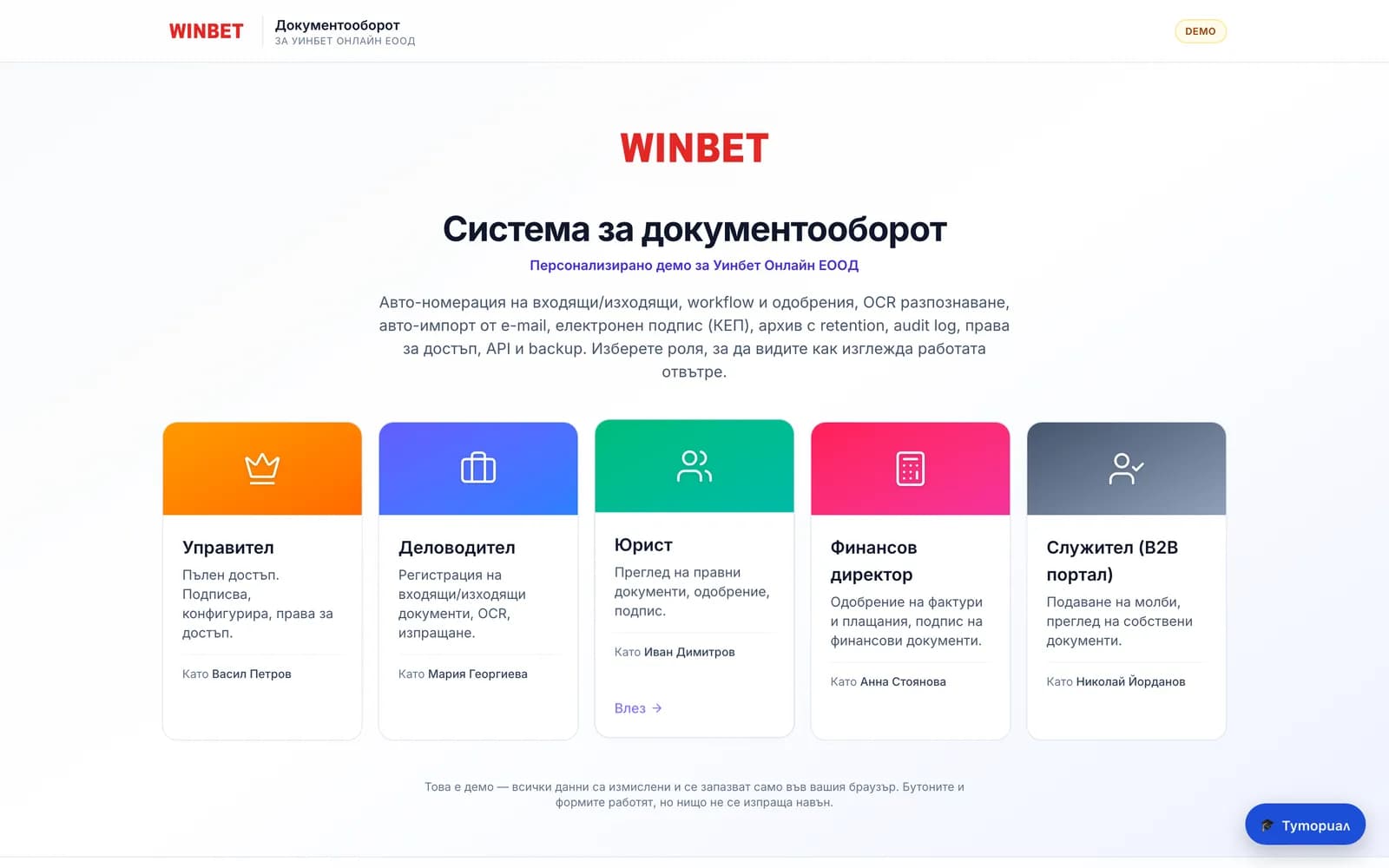
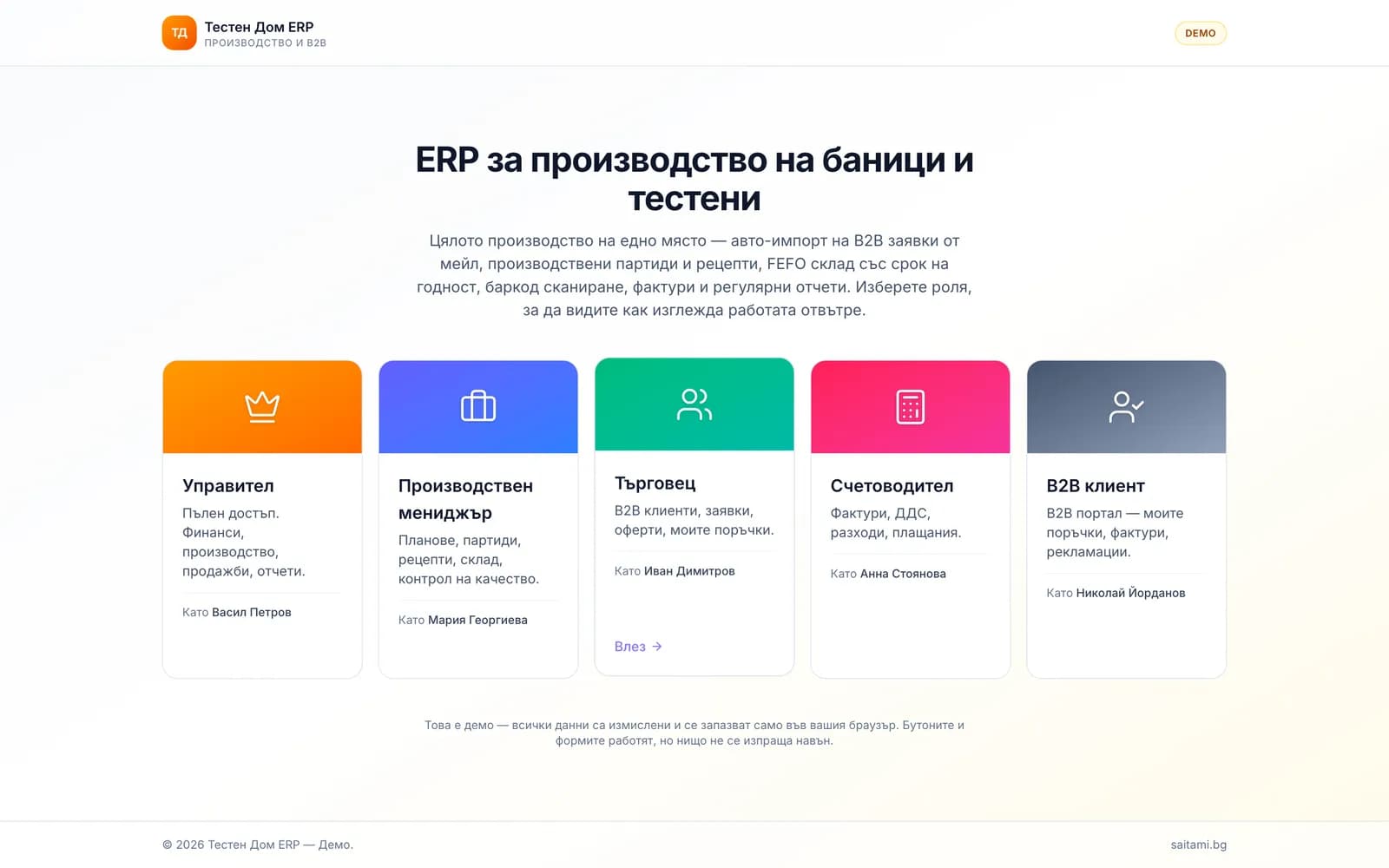
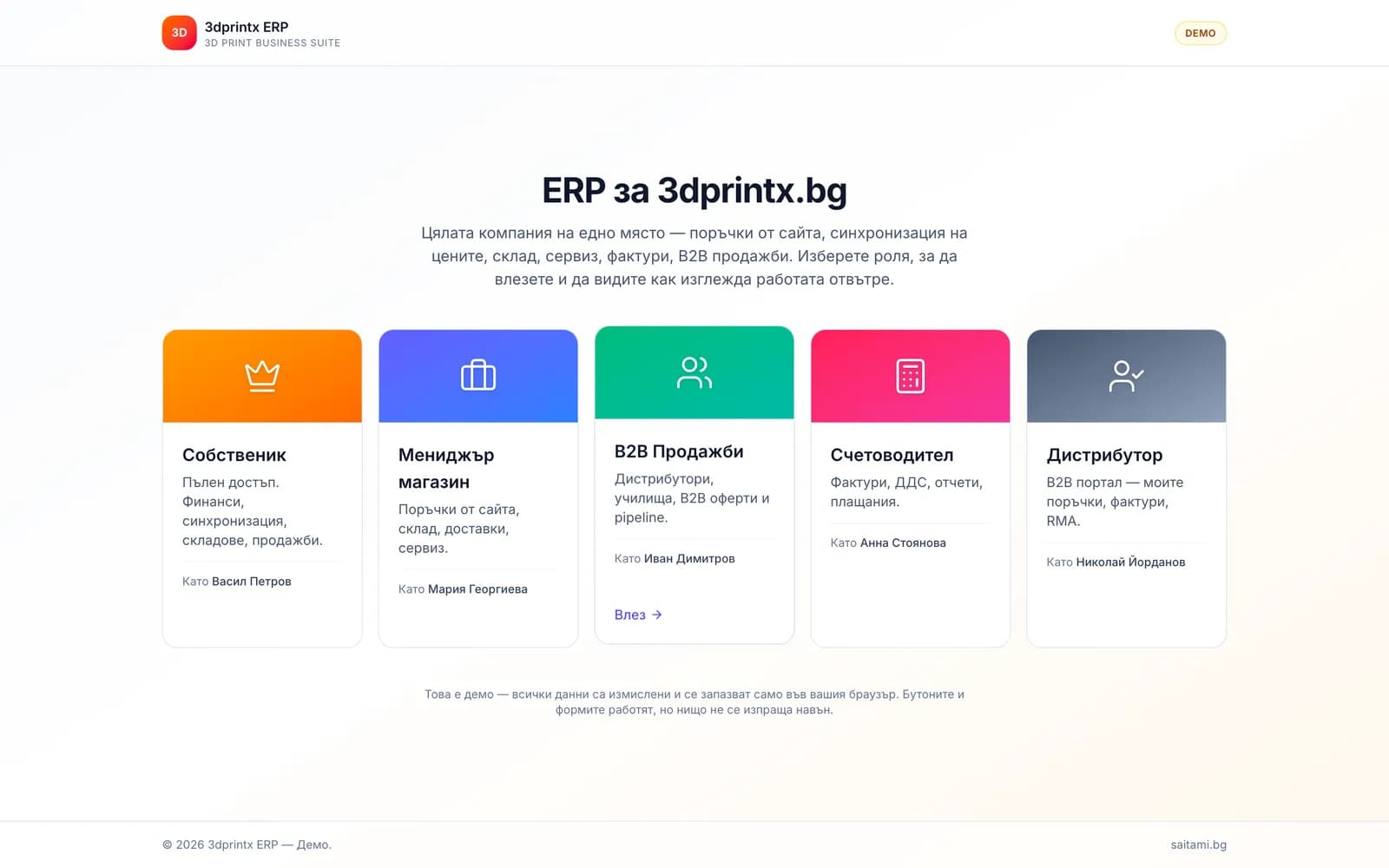
Ekovat is a custom ERP for a ViK company with field teams: requests, work cards, vehicle fleet, inventory, and AI recognition of invoices and delivery notes. LiftexPro manages buildings, inspections and technicians for elevator companies, with a field app and automatic invoicing. For Pelikan DTM, the system handles two sites, a checkout with a barcode scanner, PDF documents and a connection to the online store. OMEGA LAIT’s catalogue system organises more than three thousand power supplies by dozens of technical parameters, with price levels for business customers and quote requests without registration.
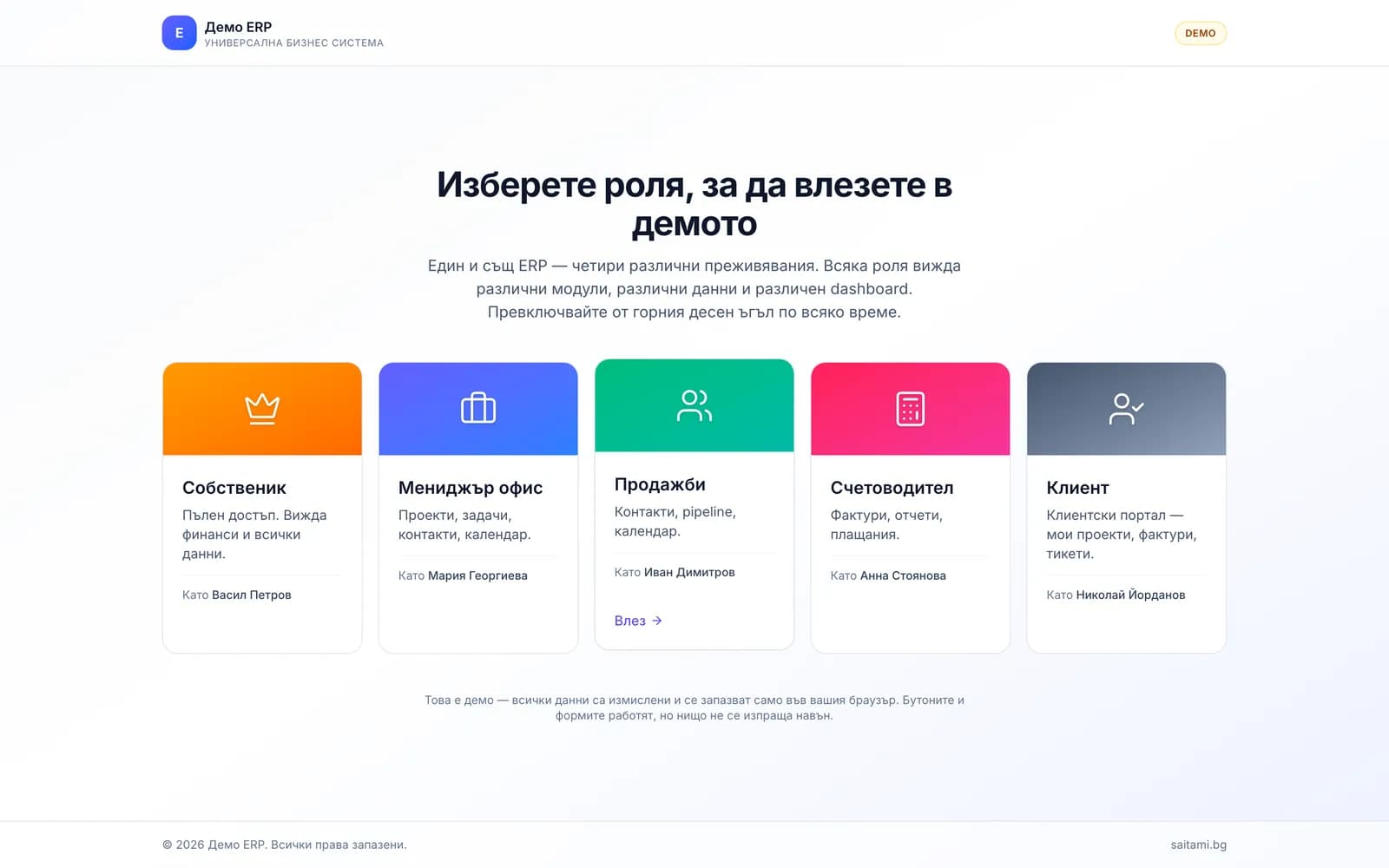
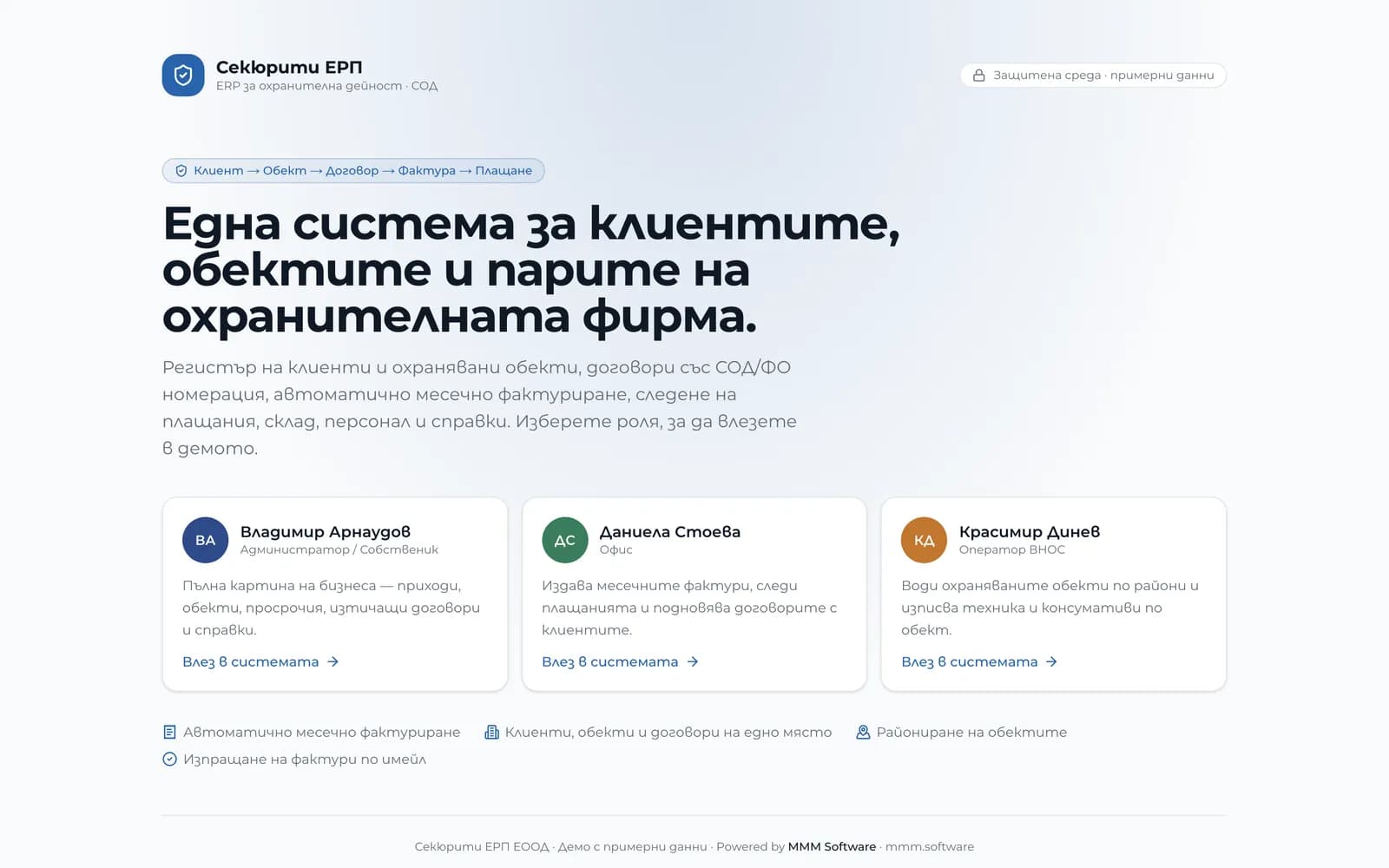
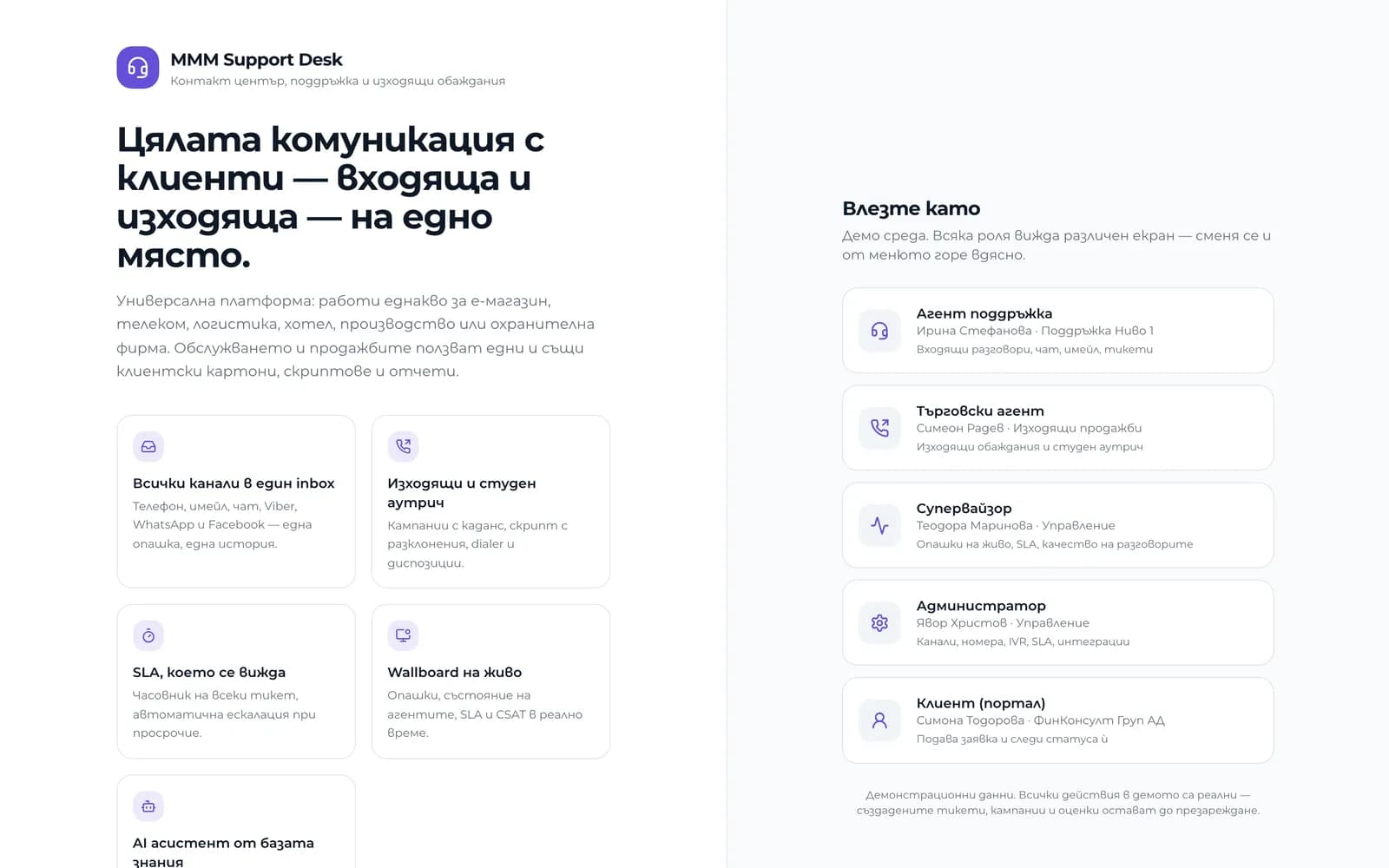
The solutions at demo.mmm.software cover other industries: Universal ERP with contacts, projects, tasks and invoices; Pergoli i navesi, from enquiry and site visit through to installation and warranty; and Sekyuriti ERP with sites, contracts and patrols on a map. Each one opens without registration.
How the project works
First, you describe how you work: which processes currently run in spreadsheets, chats and on paper, and where the most time is lost. We ask about the team, sites, documents and programs the system needs to connect to, then tell you where the project falls within the price range. According to our proposals, business software costs €3,000-€29,300, most often around €8,600: an internal tool with reports and roles is at the lower end, while a system with a customer portal, a field app and connections to payment providers and couriers is at the higher end.
We then build a demo with your core screens and your data, before preparing the proposal. The proposal lists the modules by name, the stages, the exact price, the timeline and what is not included, and is accepted online. We describe and price any scope change before starting it. Payment is made in stages, with an invoice for each one.
The first module is up and running within two to three months: we transfer the data, train the team and put it into real-world use. We add the next modules once the first is used every day. LiftexPro took eight months; the Pelikan DTM system has continued to evolve after launch.
What you get
A working system on your domain, with the code in a repository in your name, the database and all access credentials. Instructions for deploying the system on another server, team training and a document setting out the rules: who sees what, when a notification is sent and how documents are numbered.
The system runs in a browser on computers and phones; we build a separate field app when the team works offline or signs documents on site. There is no per-user fee and no subscription for the system itself. After launch, you can choose monthly support from us (€100-€350 per month according to our proposals) or continue without it.
What is not included
If we rent the server for you, it is listed as a separate line in the quote. Fees for external services such as Stripe, SMS, Econt, Speedy or an AI model are paid to their providers. Cash registers, scales, printers and scanners are yours; we check compatibility by model before preparing the quote. Accounting stays in the accounting software, and the system sends it the data. Processes outside the scope of the quote require a new quote, not an add-on along the way.
Off-the-shelf software or custom software
Ready-made software is a good choice when your process is standard, your team is small and you do not need integrations: it can be up and running in days and costs less in the first year. Custom software makes sense when the rules are yours, when people work in the field, or when you need a customer portal, a catalogue with company-specific prices, or an integration with a store, phone system and couriers. The difference in numbers is explained on the page about how much business software costs and in the Saitami vs. ready-made ERP comparison. If, after our conversation, we decide that a ready-made solution is enough for you, we will tell you.